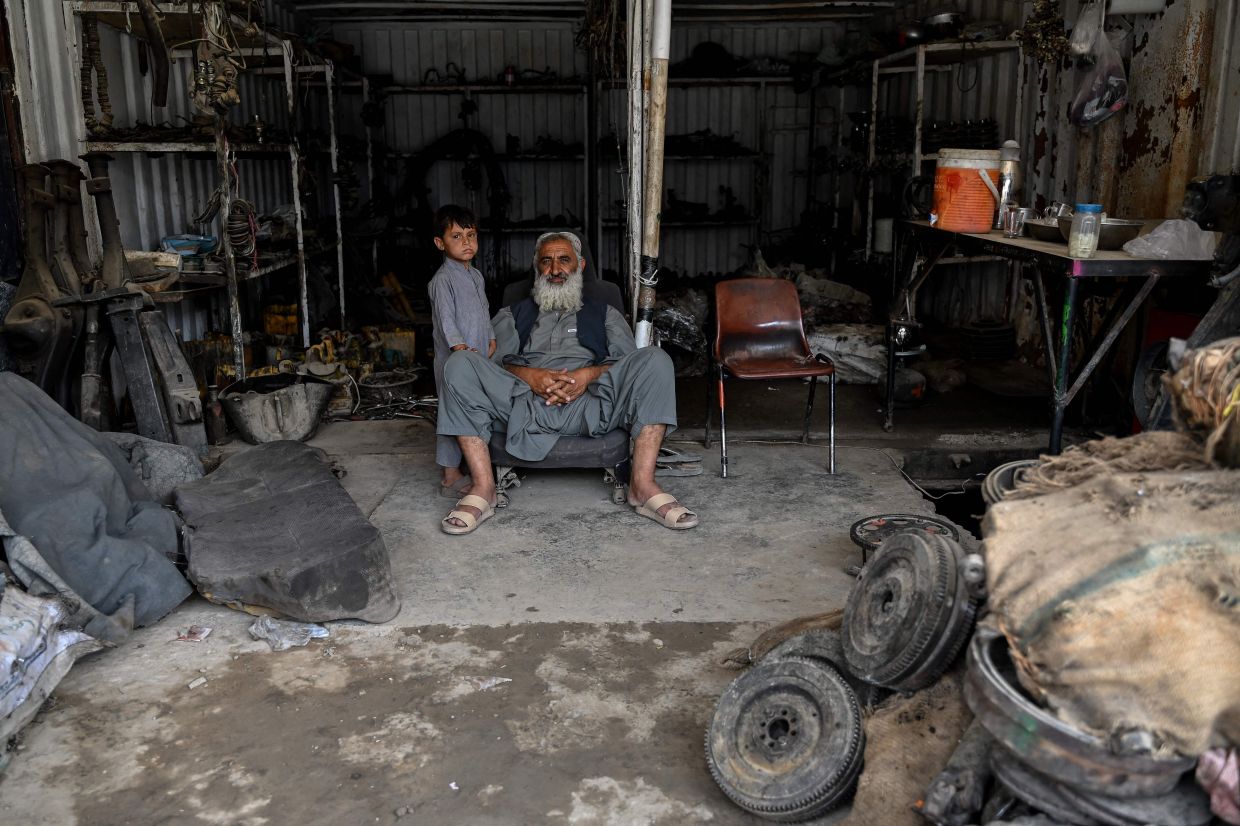
The automotive trade that once powered Kandahar's economy in southern Afghanistan has virtually ceased, strangled by a cascade of regional security crises that have progressively isolated the country's commercial lifelines. In the bustling Spin Boldak market, traders who once processed dozens of shipping containers daily now sit idle, their workshops empty and their supply chains severed. The collapse illuminates how Afghanistan's fragile economy remains desperately vulnerable to external shocks beyond its borders, a reality that carries implications far beyond the country itself as instability reverberates through South and Central Asian trade networks.
The first rupture occurred in October when violent clashes along the Pakistan frontier forced authorities to virtually seal the border crossing at Spin Boldak. For years, this crossing had served as the primary conduit for Japanese vehicle parts and components destined for Afghan assembly shops and repair facilities nationwide. The closure initially forced traders to explore alternative routes, primarily routing shipments through Iran's Bandar Abbas port at considerable additional expense and logistical complexity. Abdul Baqi Bina, deputy head of the Kandahar Chamber of Commerce and Investment, acknowledged that while this makeshift arrangement proved difficult, it at least preserved some commercial activity and prevented complete market shutdown.
That precarious equilibrium unraveled entirely in February when geopolitical tensions in the Middle East erupted into open conflict, triggering unprecedented disruption across the Strait of Hormuz—one of the world's most critical maritime chokepoints. The international shipping industry was forced to implement costly detours and implement heightened security protocols, fundamentally restructuring global logistics networks. For Afghan importers dependent on maritime routes through the Gulf, the consequences proved catastrophic. Shipping costs per container, previously settled at approximately US$2,000, skyrocketed to US$8,000 within weeks. This multiplication in transportation costs rendered most import operations economically unviable for traders operating on thin margins in a developing economy.
The physical consequences of these disruptions manifest acutely at Jebel Ali port in Dubai, a crucial global logistics hub where Afghan shipments now languish in mounting storage facilities. Asadullah, an established importer who sources products from both Dubai and Japanese suppliers, finds himself holding more than thirty containers stranded in warehouses, unable to proceed toward Afghanistan and too expensive to retrieve. His experience typifies the predicament facing dozens of traders whose working capital now sits frozen in overseas ports, generating storage fees while their businesses generate zero revenue. The psychological toll on business owners accustomed to daily turnover and steady cash flow manifests in expressions of resignation and hopelessness about prospects for recovery.
Masoud, another major importer specializing in Japanese components, has watched his monthly throughput collapse from hundreds of containers to literally zero since the Iranian conflict began. Rather than continue accumulating storage charges on vessels stranded abroad, he has made the painful decision to initiate reverse shipments back to Japan, accepting total loss on the transaction. This represents not merely a business setback but a functional admission that normal trade patterns have become impossible. The World Bank's May assessment of Afghanistan's economic vulnerability took on acute relevance in this context, noting the nation faces a widening chasm between imports and exports equivalent to seventy percent of GDP in the 2025 fiscal year. The automotive sector's collapse exemplifies this structural vulnerability on a microcosmic scale.
The employment consequences ripple rapidly through Kandahar's working population. Mohammad Naeem, a crane operator at the market, confronts the prospect of permanent joblessness if shipments do not resume soon. At just twenty-one years old, he faces the prospect of abandoning the trade he has learned in favor of entirely different employment. Workshop proprietors who employed teams of mechanics and assembly workers now watch their payroll obligations mount while production remains impossible. Samiullah, who operated a profitable operation producing five to seven vehicles weekly, now struggles to justify retaining staff when no components arrive and no cars can be assembled. The economic pressure to lay off workers grows daily, yet the prospect of widespread unemployment extends the crisis beyond individual businesses into broader community destabilization.
At retail showrooms within the market, the visible inventory of finished vehicles assembled during previous periods now represents unsalable inventory rather than working capital. Noor Ali's showroom displays approximately a dozen vehicles constructed from imported Japanese parts, vehicles that accumulated when business was functional but now represent deteriorating assets. A month has elapsed since his last sale, and customers have progressively disappeared as word spreads that no new inventory will arrive. The psychological impact of presiding over an inventory of expensive vehicles nobody wants cannot be underestimated as a symbol of commercial collapse.
The broader implications of Spin Boldak's stagnation extend beyond Kandahar into Afghanistan's national economy. Vehicle parts distributed from this market supply repair facilities throughout the country, meaning the supply disruption affects mechanics and service shops in distant provinces. The assembly operations that transformed imported components into finished vehicles represented a modest value-addition activity and source of skilled employment. Its cessation removes one of the few functioning industrial segments in Afghanistan's underdeveloped manufacturing sector, pushing the economy further toward dependence on agriculture and informal commerce.
Regional observers watching Afghanistan's predicament confront an uncomfortable reality: the country's economic prospects remain hostage to security developments in neighboring Pakistan and distant Middle East territories. The fragility exposed by these crises suggests that absent fundamental improvements in border security and international maritime stability, Afghan traders cannot reliably maintain supply chains to international markets. The situation carries implications for neighboring Central Asian states whose own trade corridors face similar vulnerabilities. Investment in alternative transit routes through less volatile regions—whether through upgraded roads to Tajikistan or enhanced rail connections to Uzbekistan—might reduce this dependency, but such infrastructure development requires years of construction and significant capital. For now, Kandahar's traders await diplomatic resolutions they cannot influence, their hopes anchored to statements from distant policymakers and conditional upon a return to normalcy that increasingly appears distant.

