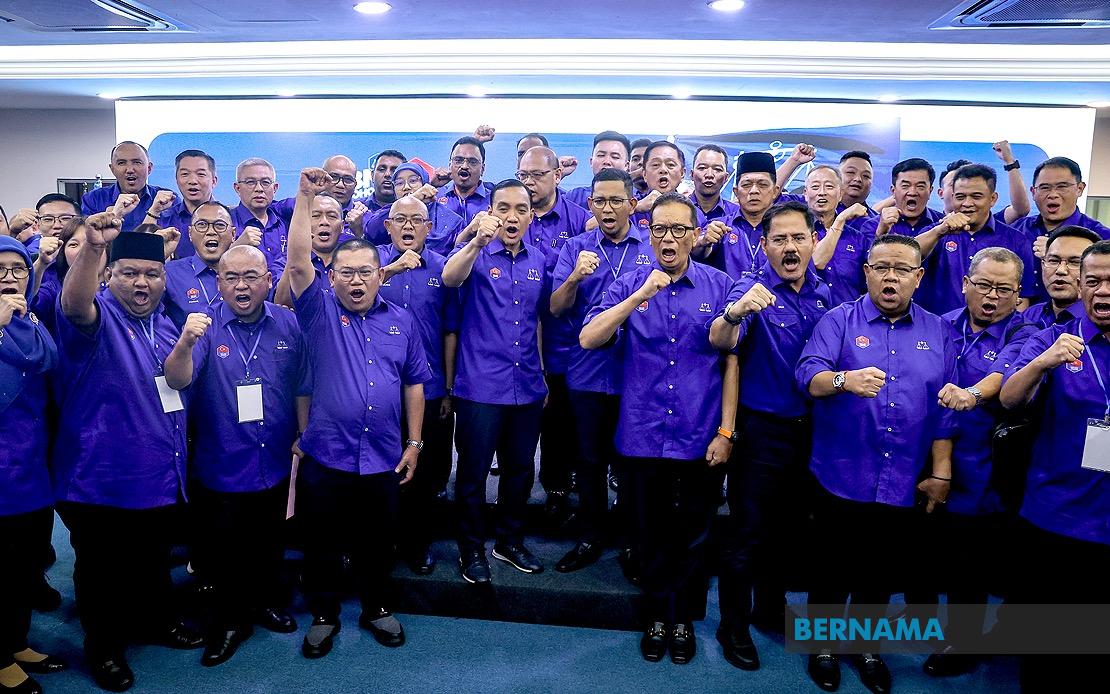
Barisan Nasional's Johor chapter has revealed its full roster of candidates for the forthcoming 16th state election, deploying a blend of seasoned political veterans and fresh contenders to contest all 56 state assembly seats. The announcement, made by Johor BN chairman Datuk Onn Hafiz Ghazi at a ceremony in Johor Bahru on June 24, presents a strategic reconfiguration of the coalition's electoral machinery across the southern state. The slate reflects an effort to balance continuity with renewal as BN seeks to consolidate its position in one of its traditional political strongholds.
The candidate composition reveals the internal dynamics of the three-party coalition, with UMNO fielding 37 candidates, MCA contributing 15, and MIC nominating four representatives. This distribution underscores UMNO's dominant role within the BN structure in Johor, a pattern consistent with the coalition's federal and state configurations. The selection process carried the formal endorsement of BN chairman Datuk Seri Dr Ahmad Zahid Hamidi, lending centralized legitimacy to the Johor leadership's choices. Notably, Onn Hafiz emphasised in his remarks that candidacy represents neither reward nor entitlement, but rather a solemn responsibility to serve constituents with integrity—a messaging effort aimed at setting expectations for campaign conduct among the assembled candidates.
Among the most significant announcements is the return of Datuk Seri Dr Adham Baba to electoral politics in the Pasir Raja constituency. The former health minister, who simultaneously serves as chief of the Tenggara UMNO division, had previously represented Pasir Raja across two consecutive terms spanning 2008 to 2018. His political career also includes dual tenures as Member of Parliament for Tenggara, first from 2004 to 2008 and again from 2018 to 2022. Adham's nomination signals BN's confidence in fielding an experienced figure with established roots in the constituency, a tactic frequently employed by major parties to contest seats where incumbency or perceived strength offers electoral advantage. His return to Pasir Raja represents a deliberate attempt to leverage name recognition and prior electoral performance in securing the seat.
Onn Hafiz himself will contest the Machap seat, where he secured victory during the 2022 state election. As sitting Menteri Besar, his defensive campaign will carry symbolic weight beyond the individual constituency, functioning as a barometer for BN's broader performance in Johor. The presence of the state chief executive on the ballot provides party machinery with a focal point for mobilization efforts while simultaneously exposing him to localized vulnerabilities or shifting voter sentiment. His retention as the coalition's chief ministerial candidate reflects party confidence in his leadership and electoral viability within the state context.
Significantly, the candidate roster demonstrates selective attrition among previous office-holders. Datuk Seri Hasni Mohammad, the incumbent assemblyman for Benut and a former Menteri Besar, has been dropped from the line-up entirely. BN has instead nominated Datuk Mohd Sumali Reduan, the UMNO working secretary, to contest the seat. This decision represents a notable shift in BN's representation for Benut and reflects internal deliberations regarding candidate suitability and electoral prospects. Such changes, while routine in electoral cycles, often generate speculation about shifting factional dynamics or assessments of electoral competitiveness within party structures.
The coalition has demonstrated considerable continuity in retaining nine of ten former Johor executive councillors who sought re-election in 2022. This preservation of governmental experience suggests BN's strategic preference for maintaining institutional continuity and leveraging the administrative credentials of incumbent decision-makers. The sole exception—Khairin-Nisa Ismail @ Md On, the former chairman of the State Women, Family and Community Development Committee—was not renominated for the Serom seat. Her exclusion stands out against the broader pattern of retention and warrants attention as an indicator of shifting priorities within the coalition's approach to women's representation or internal realignments within UMNO.
Onn Hafiz's campaign messaging emphasized the importance of courteous, respectful, and prudent electoral conduct, explicitly linking such comportment to values upheld by Johor's populace. This framing suggests BN's concern with countering perceptions of aggressive or unethical campaigning, a recurring issue in contemporary Malaysian electoral politics. By articulating conduct standards at the point of candidate announcement, BN sought to establish normative expectations for the campaign period ahead, potentially anticipating criticism or seeking to differentiate its campaign approach from competitors. The emphasis on integrity and respectful engagement reflects broader anxieties within the party about electoral legitimacy and public confidence.
For Malaysian voters and political observers, the unveiled slate carries implications extending beyond Johor itself. The composition and strategic choices evident in candidate selection offer insights into BN's current organizational health, factional equilibria, and assessment of electoral competitiveness across diverse constituencies. The retention of most executive councillors signals organizational confidence, whilst selective removals such as Hasni Mohammad's exclusion hint at recalibrations in party strategy. Adham Baba's return introduces a potentially high-profile campaigner to the fold, though questions about his electoral appeal after his tenure as health minister—a portfolio scrutinized during the pandemic period—remain relevant considerations.
The Johor election assumes particular significance within Malaysia's broader political context, as the state represents substantial electoral weight and has historically functioned as a proving ground for BN's electoral viability. Any shifts in BN's Johor performance relative to the 2022 result will reverberate across national political calculations and factional positioning within the coalition. The comprehensive candidate slate announced on June 24 thus represents not merely a localized electoral exercise but a significant moment in assessing the current strength and strategic direction of Malaysia's dominant coalition as it prepares to contest the southern state's assembly seats.