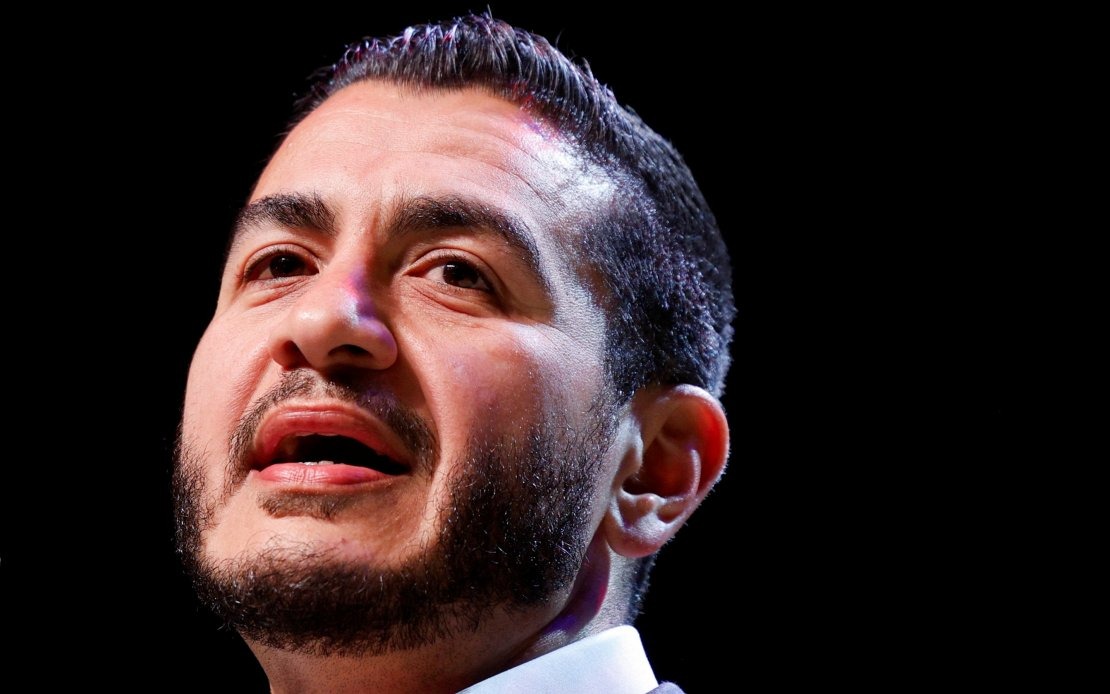
Abdul El-Sayed's insurgent campaign for Michigan's Democratic Senate nomination has gained momentum, positioning him narrowly ahead of established rival Haley Stevens as five American states selected their nominees for November's critical midterm elections. With approximately 91 per cent of ballots counted in the Michigan race, the race remained too close for the Associated Press to formally declare a winner, though El-Sayed maintained his slim advantage heading into Wednesday.
The Michigan Senate contest reflects a fundamental divide within the Democratic Party between competing visions of the future. El-Sayed's grassroots coalition drew backing from influential progressive voices including Bernie Sanders, Alexandria Ocasio-Cortez, and Rashida Tlaib, signalling an appeal to younger and more ideologically left-leaning Democrats. Stevens, by contrast, secured endorsements from party establishment figures including the retiring senator Gary Peters himself, indicating support from traditional Democratic leadership networks.
At the centre of this Democratic primary battle lay a deeply divisive geopolitical issue: American support for Israel and its military operations in Gaza. This question mobilised significant portions of the Michigan electorate, particularly among younger voters and progressive activists, underscoring how international conflicts can reshape domestic American politics. The prominence of this issue in a Midwestern Senate race demonstrates how Palestinian-American communities and anti-war sentiment have become electoral forces that establishment politicians cannot ignore.
The general election matchup will pit the Democratic nominee against Republican Mike Rogers, who secured his party's nomination without opposition. This November contest takes on special significance as Michigan has emerged as a crucial swing state in recent presidential cycles, and Senate control remains fiercely competitive across the nation. Peters' retirement opens this traditionally Democratic seat, making it a genuine battleground.
Michigan's congressional races revealed the enduring strength of Republican incumbency in the state. In the 1st District, Jack Bergman dominated his primary opposition with 74.3 per cent support, while Bill Huizenga secured renomination in the 4th District with an overwhelming 85 per cent of votes against Philip Tanis. Huizenga will proceed to face Democrat Sean McCann, who prevailed in his own primary competition.
Kansas presents a particularly interesting political landscape as the state demonstrates significant internal divisions within both major parties. Republican Senator Roger Marshall brushed aside primary challenger Pond Naramore with commanding 79.9 per cent support, while in the gubernatorial race, the political dynamics proved more complex. Democrat Cindy Holscher claimed her party's nomination, and will face Republican Ty Masterson, who won endorsement from former president Donald Trump in a crowded field. This race will determine the successor to Democratic Governor Laura Kelly, who cannot seek reelection due to term limits.
Missouri's primaries took place under new congressional district boundaries that Republican state lawmakers had redrawn with the specific intention of strengthening Republican prospects in House races. Within this redrawn landscape, Democratic Representative Wesley Bell successfully defended his St. Louis seat against four primary challengers, notably including former Representative Cori Bush. This outcome suggests that incumbency advantages can persist even under adverse redistricting circumstances, though Bell's victory margin deserves scrutiny as Democrats face headwinds nationally.
Virginia's Senate contest pitted Democratic incumbent Mark Warner against Republican Bert Mizusawa, who won an uncompetitive Republican primary. Warner's unopposed path through the Democratic primary underscores his political strength in a state that has shifted decisively Democratic in recent election cycles. However, Virginia's congressional races proved considerably more competitive. In the 1st District, Shannon Taylor secured the Democratic nomination with just over half of votes cast, positioning her against experienced Republican Rob Wittman, who faces a formidable yet not impossible challenge in defending his 10th term. The 2nd District race features former Representative Elaine Luria making a comeback bid against Republican incumbent Jen Kiggans, while the 7th District presents perhaps Republicans' most vulnerable seat, with Doug Ollivart challenging progressive-aligned Democratic incumbent Eugene Vindman.
Washington's electoral system, which employs an all-party primary format, produced a different dynamic from traditional closed primaries. In the 1st Congressional District, Democrat Suzan DelBene and Republican Mary Silva both advanced to the general election, while in the 2nd District, Democrat Marie Gluesenkamp Perez will face Trump-endorsed Republican John Braun. The 6th District sent Democrat Emily Randall and Republican Teresa Fox forward to November's contest. This all-party primary system, unique among the states profiled, may facilitate different coalition-building patterns and reduce the influence of partisan gatekeepers.
These five-state primaries provide crucial indicators of momentum heading into the final stretch before November's midterm elections. For Malaysian observers tracking American politics, these contests illustrate how domestic policy divisions, international conflicts, and state-level political dynamics interact to shape electoral outcomes. The involvement of figures like Sanders and Trump in primary endorsements demonstrates how polarised contemporary American politics has become, with significant implications for bilateral relations and international engagement patterns that countries across the Asia-Pacific region, including Malaysia, must navigate in their dealings with Washington.

