Bollywood actor Aamir Khan has firmly rejected accusations levelling the controversial 'love jihad' charge against him, using a recent interview to clarify his stance on interfaith marriages and defend his family's long-standing practice of accepting partners across religious boundaries. The allegations emerged following his marriage to longtime friend Gauri Spratt, prompting the actor to publicly address what he characterises as an increasingly absurd public discourse surrounding interfaith relationships.
In his response, Khan traced a pattern of interfaith marriages spanning multiple generations of his family, establishing what he presents as a principled approach to matrimonial choices unconstrained by religious identity. He described this as reflecting his family's core belief system: welcoming individuals from different faiths without any expectation or requirement that they abandon their own religious traditions. This framing positions the family's interfaith unions not as exceptional cases but as consistent expressions of a secular worldview embedded in household values.
Khan provided specific examples to substantiate his claim about the prevalence of interfaith marriages within his extended family network. Both his sisters have married Hindu men, he noted, while his daughter's marriage is also to a Hindu partner. Additionally, his cousin and filmmaker Mansoor Khan is married to a Christian woman, further illustrating what Khan describes as a family norm rather than an anomaly.
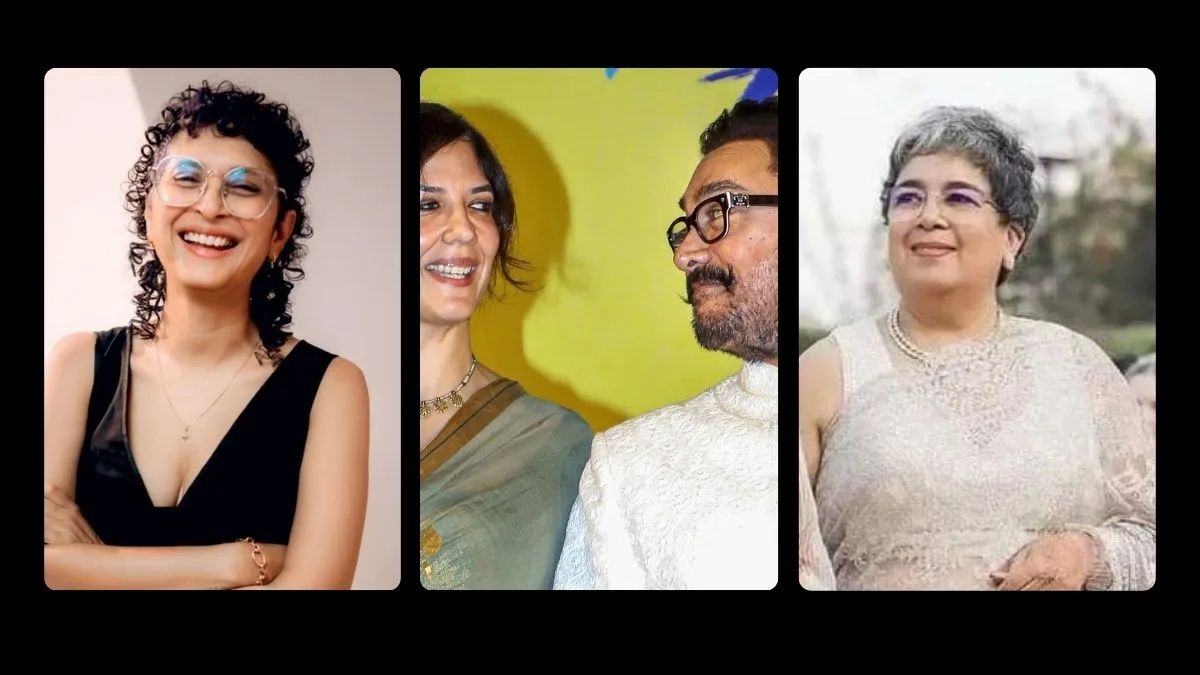
Regarding his own matrimonial history, Khan addressed each marriage individually to counter the specific allegations. His first wife, Reena Dutta, whom he married in 1986 before their 2002 divorce, never converted from her religion. His second wife, filmmaker Kiran Rao, whom he married in 2005 and separated from in 2021, similarly maintained her own faith throughout their relationship. His current wife, Gauri Spratt, is Christian and does not actively practise her religion, Khan disclosed, but crucially, she did not convert to Islam upon marriage. Khan emphasised that all three marriages were conducted as civil ceremonies, reflecting a secular legal framework rather than religious processes.
The significance of Khan's emphasis on civil marriages cannot be understated in the Indian context, where marriage ceremonies often carry strong religious dimensions. By highlighting this aspect, Khan signals that the legal and emotional commitments were solemnised through secular rather than religious institutional mechanisms, further distancing his marriages from the religious conversion narrative embedded in 'love jihad' accusations.
For Malaysian and Southeast Asian audiences, Khan's situation illuminates broader regional tensions surrounding interfaith relationships and minority community anxieties. Similar conversations permeate Southeast Asian societies, where concerns about religious identity, cultural preservation, and perceived proselytisation shape public discourse around marriages between individuals of different faiths. Khan's case demonstrates how these sensitivities extend across South Asia and resonate with diaspora communities throughout the region.
Khan's marriage to Gauri Spratt, formalised on July 5 at his Mumbai residence, represents the culmination of a relationship that developed somewhat unconventionally. The pair had known each other for approximately 25 years before reconnecting just over two years ago in Bengaluru through Khan's cousin Nuzhat Khan. Their rekindled friendship gradually evolved into a romantic relationship, with the couple dating for more than two years before deciding to marry. Khan had publicly introduced Spratt during his 60th birthday celebrations in March last year, formally announcing their relationship to media and the public at that juncture.
Khan's characterisation of the discourse surrounding his marriage as increasingly 'comical' suggests frustration with what he perceives as the proliferation of unsubstantiated claims in public conversation. His tone indicates exasperation at being positioned as emblematic of a alleged social problem—variously described as 'love jihad' in Indian discourse—that he fundamentally rejects as a characterisation of his life and choices. This rhetorical stance represents not merely a personal defence but an implicit critique of the entire framework through which such allegations are constructed and circulated.
The actor's willingness to engage publicly with these allegations reflects a strategic communication decision: rather than ignoring the accusations, Khan chose to provide detailed context about his family history and personal relationships. This approach attempts to reframe the narrative by demonstrating patterns across multiple generations and relationships, suggesting systematic family values rather than individual aberrations.
Khan's separation from Kiran Rao in 2021, despite ending their marriage, resulted in continued professional collaboration and co-parenting of their son, demonstrating that interfaith or intercommunal relationships need not result in irrevocable social or familial ruptures. This practical reality further complicates the 'love jihad' narrative, which often presumes conflict and communal fragmentation as inevitable outcomes.
For broader audiences across South and Southeast Asia, Khan's public intervention enters a contentious space where personal choices intersect with communal anxieties, religious identity politics, and demographic concerns. His framing of interfaith marriages as consistent with family values and secular legal frameworks offers one articulation within a debate that continues to generate significant social and political tension across the region. Whether such clarifications ultimately reshape public perception remains an open question in an environment where allegations of this nature often persist regardless of factual refutation.

