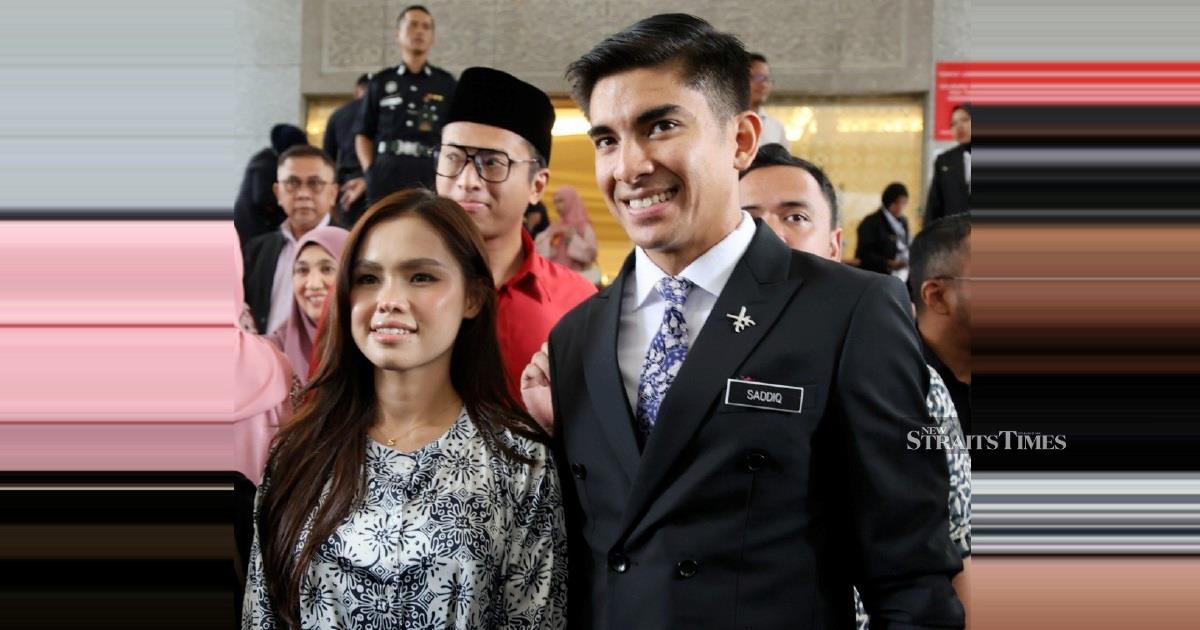
Actress and singer Bella Astillah has expressed her emotional reaction after learning that her fiancé, Syed Saddiq Syed Abdul Rahman, the member of parliament for Muar, regularly wears the neckties she selected for him whenever he makes appearances at court. The discovery highlighted a quiet but meaningful way in which the couple expresses their bond during what has been an intensive period of legal proceedings affecting the younger politician.
Syed Saddiq's decision to incorporate these personal gifts into his courtroom wardrobe speaks to the significance of the tokens Astillah has given him. For many public figures navigating challenging legal circumstances, such small gestures from close family members often carry symbolic weight, serving as tangible reminders of support during demanding moments. The choice to wear these ties consistently suggests that Syed Saddiq has deliberately maintained this connection to his fiancée throughout his legal journey, making what could be interpreted as a public acknowledgement of her presence in his life during a turbulent period.
The revelation about these sentimental accessories comes amid Syed Saddiq's ongoing involvement in court matters. The Muar MP, who has been a prominent figure in Malaysian politics and known for his youth-oriented political initiatives, has faced various legal challenges that have required multiple court appearances. Each time he has stepped into the courtroom, the ties Astillah gave him have accompanied him, creating a consistent thread—literally and figuratively—between his personal and public spheres.
Bella Astillah, who has built a career spanning both entertainment and music industries in Malaysia, appears to have been touched by this quiet devotion. Her public acknowledgement of discovering this habit suggests that the gesture, while perhaps unspoken between the couple, holds considerable meaning for her. Such displays of mutual support are particularly noteworthy in the Malaysian entertainment and political landscape, where public figures often maintain careful separation between their professional challenges and personal relationships.
The tie motif itself carries particular resonance in formal legal settings, where courtroom attire remains governed by strict conventions. By choosing to wear ties selected by his fiancée rather than generic options, Syed Saddiq has managed to introduce a personal element into an otherwise strictly formal environment. This subtle form of self-expression within the constraints of legal propriety demonstrates how meaningful gestures need not be ostentatious to carry weight.
For the broader Malaysian public following both figures' careers and personal lives, this detail offers insight into how couples in the public eye navigate private support systems during public crises. The entertainment industry and political sphere frequently intersect in Malaysia, and the visibility of Astillah's gesture—and Syed Saddiq's consistent wearing of these gifts—provides a humanising counterpoint to the formal nature of legal proceedings.
The couple's engagement itself represents a notable union between the entertainment and political sectors in Malaysia. Astillah's prominence as an entertainer combined with Syed Saddiq's position as an MP creates a partnership that naturally attracts public interest and media attention. However, their approach to expressing support for one another through understated gestures like the tie-wearing demonstrates a preference for quiet dignity rather than public grandstanding during challenging times.
Such moments also reflect evolving attitudes toward masculinity and emotional expression in Malaysian society. A male politician openly displaying sentimental attachment to gifts from his fiancée, and doing so in the formal setting of a courtroom, challenges traditional notions of emotional restraint often expected in professional and legal contexts. This normalisation of affectionate gestures between partners, even in formal settings, marks a subtle cultural shift in how Malaysian public figures conduct themselves.
The story also underscores the importance of personal relationships as anchors during periods of legal uncertainty and public scrutiny. For individuals facing court proceedings, the presence of supportive family members—even represented through something as simple as a necktie—can provide psychological grounding. Astillah's involvement in Syed Saddiq's courtroom appearances, albeit through these carefully chosen accessories, positions her as an active participant in his legal experience rather than a distant observer.
Looking forward, the revelation about these ties may influence how the public perceives both figures and their relationship. In an era where personal branding and public perception significantly impact political and entertainment careers, the authenticity of their mutual support—demonstrated through such unguarded details—could strengthen their standing with audiences who value genuine emotional connection over manufactured public relations narratives.
The continued wearing of Astillah's gifts to each court appearance also suggests that whatever legal challenges Syed Saddiq faces, he does not navigate them in isolation. The ties serve as visible reminders that his fiancée stands beside him, a message communicated not through elaborate statements but through the simple consistency of wearing what she has chosen for him. In this way, a collection of neckties becomes a powerful symbol of partnership and mutual devotion during a defining period in his public life.

