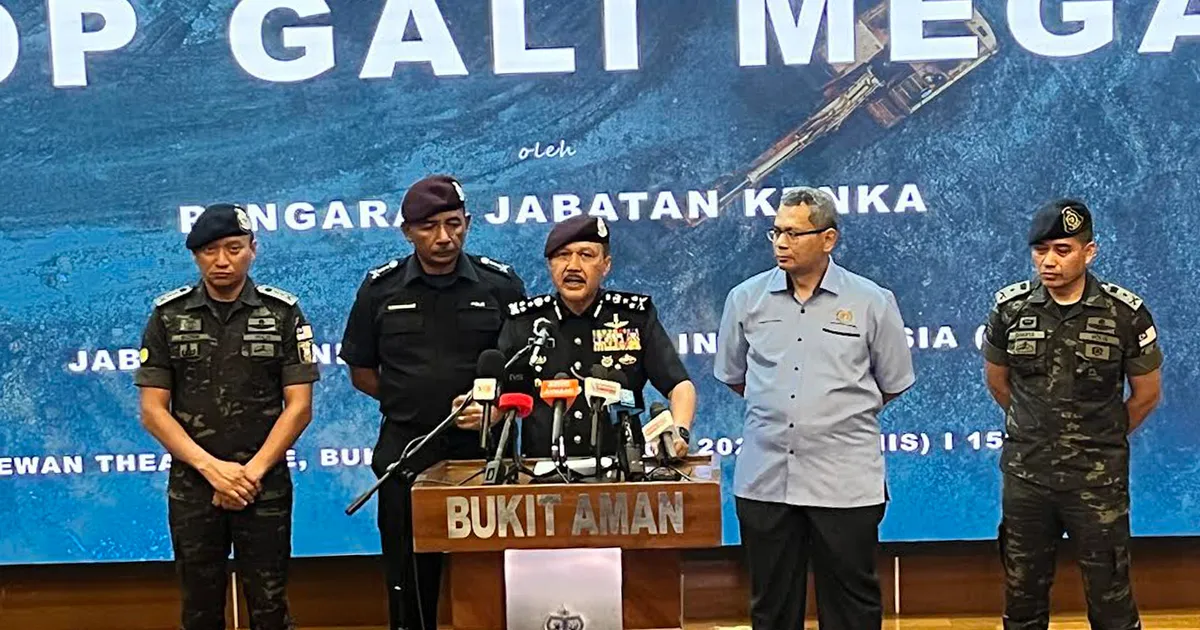
A major crackdown on illegal mining operations has resulted in the arrest of 99 suspects and the seizure of assets valued at RM119 million, marking a significant escalation in enforcement efforts against resource extraction crimes that have plagued Malaysia's mining sector. The sweeping operation, conducted between August 19 and 23, demonstrates the government's commitment to combating organised illegal mining networks that have long evaded detection across the country's jurisdictions.
During the five-day enforcement campaign, authorities recovered approximately 33,000 tonnes of natural resources extracted through illegal means, including coal, quarry stone, earth and sand with a combined market value of RM21 million. The sheer volume of materials confiscated underscores the scale of underground operations that have been stripping Malaysia's mineral wealth without proper licensing or regulatory oversight, representing a direct loss to the state treasury and legitimate mining operators.
Illegal mining has emerged as a persistent challenge for Malaysian authorities, with operations often conducted in remote areas where monitoring is difficult and enforcement presence remains thin. These unauthorised extraction activities not only deprive the government of crucial mineral revenues and royalties but also inflict severe environmental damage on landscapes, contaminating waterways and destroying ecosystems in regions where they occur. The problem transcends simple resource theft, encompassing broader concerns about national sovereignty over natural assets and the integrity of Malaysia's regulatory frameworks.
The August operation represents a coordinated response involving multiple enforcement agencies working across different states, suggesting a shift toward more integrated and sustained efforts to dismantle illegal mining networks. Such coordination is essential given that these criminal operations frequently involve sophisticated supply chains, laundering mechanisms, and connections to organised syndicates that operate across state boundaries. The recovery of RM119 million in assets—equipment, vehicles, machinery, and processed materials—demonstrates that authorities are now targeting not merely the extracted resources but the entire infrastructure supporting these illicit enterprises.
For legitimate mining companies operating within Malaysia's regulatory framework, the crackdown provides some assurance that unfair competition from illegal operators is being addressed. Lawful miners invest substantially in compliance costs, environmental management, and licensing fees, placing them at a competitive disadvantage against unscrupulous competitors who bypass such requirements entirely. The enforcement action helps restore market equilibrium and protects the viability of regulated mining operations.
The implications extend to Malaysia's international standing on resource governance and environmental stewardship. Nations that fail to control illegal mining face reputational damage in global commodity markets and risk sanctions from trading partners increasingly concerned with supply chain integrity and environmental compliance. A demonstrable enforcement record therefore serves Malaysia's broader economic interests beyond simply reclaiming stolen resources.
Illegal mining operations often intersect with other criminal activities, including money laundering, human trafficking, and corruption of local officials. The August operation's success in apprehending 99 suspects suggests that investigations may uncover these broader criminal networks, potentially leading to prosecutions extending beyond mining violations. Intelligence gathered during such operations frequently provides leads for authorities investigating organised crime groups operating across multiple jurisdictions in Southeast Asia.
The environmental remediation costs associated with illegal mining sites are typically borne by the government and affected communities, representing hidden losses beyond the mineral values extracted. Illegal mining operations disregard environmental standards, leaving behind degraded landscapes, contaminated water sources, and hazardous conditions that require expensive restoration. Communities living near illegal mining sites face health risks and loss of agricultural productivity, though they see no benefit from the extracted resources.
The success of this particular operation, however, raises questions about preventative measures and how Malaysia might reduce reliance on large-scale reactive enforcement campaigns. Strengthening monitoring in known hotspots, enhancing coordination between federal and state authorities, and improving intelligence gathering on supply chains could help intercept illegal operations before they extract massive quantities of resources. International cooperation with neighbouring countries where processed illegal materials are sometimes transported also requires development.
Moving forward, the government must maintain momentum with regular enforcement operations while simultaneously addressing the underlying incentive structures that make illegal mining profitable. Streamlining the licensing process for legitimate operators, strengthening penalties for illegal extraction, and deploying technology-enabled monitoring in vulnerable areas could collectively reduce the attractiveness of operating outside regulatory frameworks. The August crackdown demonstrates capability; sustaining such efforts requires institutional commitment and adequate resource allocation.
The arrest of 99 individuals and seizure of RM119 million in assets represents tangible progress, yet observers note that successful prosecutions and conviction rates will determine the operation's ultimate effectiveness as a deterrent. The legal process following arrests remains crucial in ensuring that penalty levels sufficiently discourage recurrence and that criminal networks face meaningful consequences. This enforcement action therefore marks not a conclusion but rather a critical juncture in Malaysia's ongoing battle against resource crimes threatening national interests and environmental sustainability.

