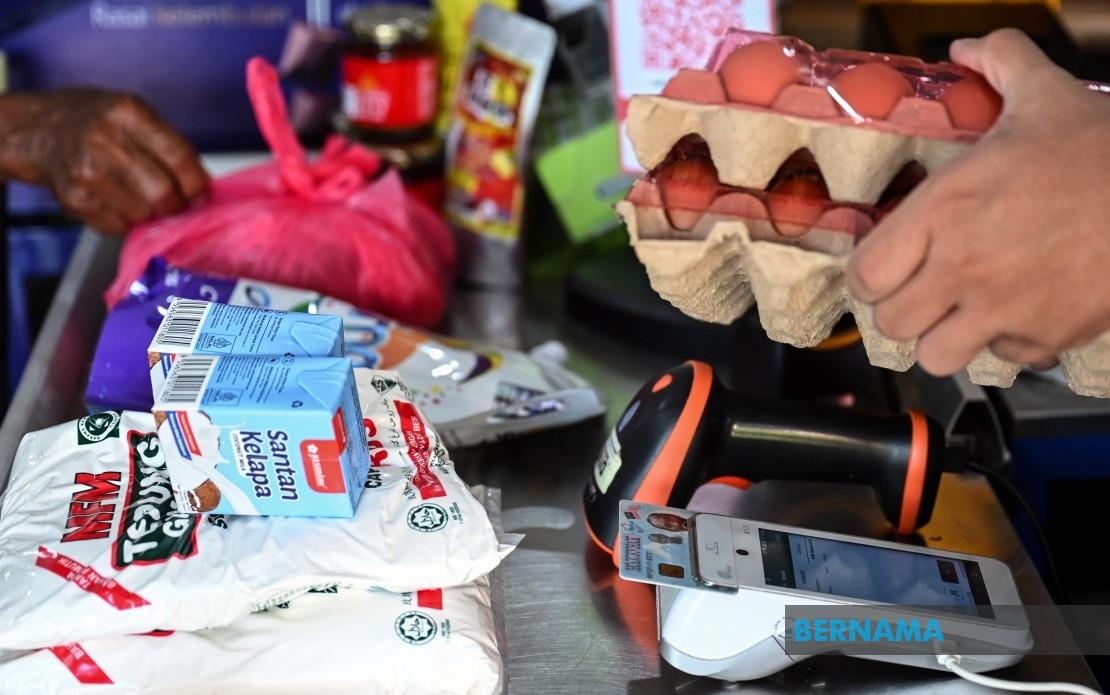
Starting today, the Ministry of Finance will begin rolling out RM1.2 billion in Phase 3 payments under the Sumbangan Tunai Rahmah (STR) programme to 5.3 million eligible Malaysians. The phased disbursement represents a significant expansion of the government's social safety net, reflecting growing recognition of cost-of-living pressures that continue to affect households across the income spectrum. The total allocation for STR and the complementary SARA monthly assistance programme in 2026 has reached RM15 billion, marking the highest financial commitment to direct cash assistance in Malaysian federal history.
The recipient base has expanded considerably since the start of the year, growing from five million to the current figure of 5.3 million—an addition of 300,000 households that underscores the evolving nature of economic vulnerability in the country. The composition reveals the dual focus of the programme: 3.9 million payments target low- and middle-income households, while 1.4 million recipients are single senior citizens. This segmentation allows the government to tailor assistance amounts according to specific demographic needs, with senior citizens receiving a flat RM150 while household payments vary between RM150 and RM600 based on income levels and the number of dependent children.
Individuals with bank accounts will have their Phase 3 STR allocations credited directly to their accounts beginning today, streamlining access and reducing administrative friction. For Malaysians without formal banking relationships—a category that remains significant in less urbanised areas—cash collections are available at any Bank Simpanan Nasional branch nationwide. This dual-channel approach acknowledges the reality that financial inclusion remains incomplete across the country, particularly among older citizens and rural communities who may prefer cash transactions or lack easy access to banking services.
The restructured assistance framework introduced this year departs from the earlier model by providing more consistent support throughout the financial year. Rather than a single annual disbursement, STR is now paid quarterly while SARA delivers monthly basic assistance to qualifying households. This regularisation of payments serves multiple purposes: it provides recipients with more predictable cash flow for managing essential expenses, reduces the temptation to misuse lump-sum payments, and distributes government expenditure more evenly across the budget cycle. By August 2026, qualifying recipients can accumulate up to RM3,300 through the combination of Phase 1, 2, and 3 STR payments plus monthly SARA disbursements, though this excludes one-off SARA payments extended to all Malaysian citizens aged 18 and above.
Prime Minister Datuk Seri Anwar Ibrahim emphasised in an official statement that the expanded assistance reflects the government's commitment to addressing living cost challenges that persist despite broader economic reforms. He noted the growth of low- and middle-income households receiving STR from 3.7 million at the start of 2026 to 3.9 million in Phase 3, demonstrating that the assistance criteria have been calibrated to capture increasing numbers of Malaysians facing genuine financial hardship. The Prime Minister framed the STR and SARA initiatives as complementary to longer-term economic strengthening efforts, positioning direct cash assistance as a bridge while structural reforms take time to improve incomes and living standards across the population.
The 2026 allocation of RM15 billion for combined STR and SARA assistance represents a dramatic increase compared to the Bantuan Rakyat 1Malaysia programme that existed in 2016, which required substantially less public funding. This scaling reflects both the population growth and the apparent structural shift in income adequacy for significant household segments. The Ministry of Finance has credited improved government financial management and governance reforms with creating fiscal space to redirect more revenue toward those in need, suggesting that efficiency gains in public expenditure have freed resources previously allocated elsewhere.
To minimise programme leakage and ensure funds reach genuine beneficiaries rather than ineligible recipients, the Ministry maintains year-round acceptance of new applications and appeals through the official STR portal at bantuantunai.hasil.gov.my. This continuous intake mechanism prevents artificial deadlines from creating bottlenecks and acknowledges that eligibility circumstances change throughout the year as households experience job losses, income reductions, or other economic shocks. The portal also hosts comprehensive FAQs addressing common questions about payment mechanics, eligibility criteria, and appeals procedures, while parallel resources for SARA assistance are available at sara.gov.my.
As with all government digital services handling financial transactions, the Ministry has issued warnings about fraudulent schemes targeting STR recipients. Scammers have created fake websites and messaging services mimicking official channels to trick beneficiaries into revealing banking credentials or paying false fees. The Ministry explicitly directs Malaysians to use only the official bantuantunai.hasil.gov.my portal for payment information and eligibility queries, and to avoid clicking links received via unsolicited messages or emails. This security advisory becomes increasingly important as the scale of STR disbursements grows, making the programme a larger and more attractive target for criminal activity.
The Phase 3 commencement illustrates how Malaysia's social protection architecture has evolved from episodic interventions into a more systematic framework addressing cost-of-living pressures. The shift from occasional large payments to regular monthly and quarterly assistance reflects lessons learned about household financial management and the psychological benefit of predictable income. For policy observers in Southeast Asia, Malaysia's approach offers both a demonstration of how governments can scale direct cash assistance and a case study in the fiscal requirements of supporting increasingly large populations facing income inadequacy despite working or being unable to work due to age or disability. The Malaysian experience suggests that cost-of-living challenges have become sufficiently entrenched to require sustained, substantial intervention rather than temporary relief measures.

