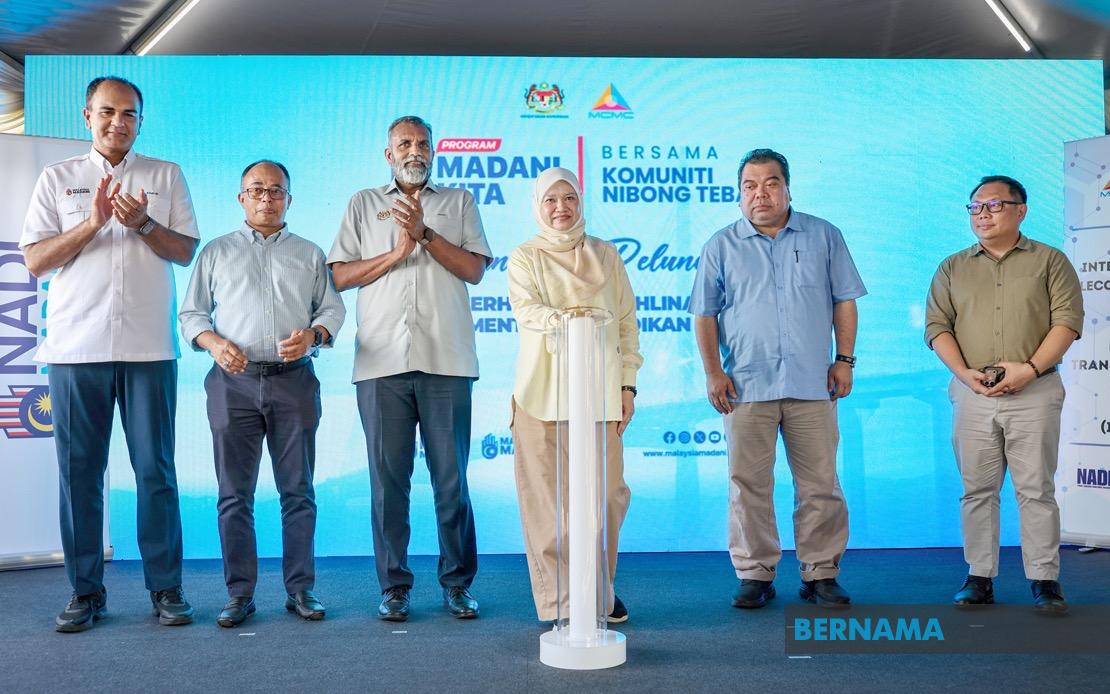
The Malaysian Communications Ministry has deployed a significant national outreach initiative through 41 MADANI Kita programmes, representing a coordinated effort to decentralise government services and strengthen the relationship between ministries and the communities they serve. The programme framework involves collaboration across multiple agencies including the Community Communications Department (J-KOM), the Malaysian Information Department (JaPen), and the Malaysian Communications and Multimedia Commission (MCMC), all operating through the National Information Dissemination Centre (NADI). This multi-agency coordination signals an attempt to streamline service delivery and create unified touchpoints for citizens seeking government information and assistance.
According to Mano Verabathran, deputy secretary-general at the Communications Ministry overseeing Telecommunications Infrastructure, the core philosophy underpinning these programmes extends beyond conventional information dissemination. The initiative recognises a fundamental gap in how governments communicate with citizens: while policy announcements and press releases reach the public through traditional channels, many Malaysians lack direct avenues to engage with those policies, understand their practical implications, or provide meaningful feedback. The MADANI Kita framework addresses this asymmetry by creating physical spaces and events where citizens can interact face-to-face with government representatives, ask questions in real time, and witness tangible demonstrations of how policies translate into community benefits.
The programmes encompass a diverse portfolio of activities intentionally designed to appeal across demographic groups and address multiple development priorities. Technology initiatives sit alongside educational offerings, skills-development workshops, and community wellbeing activities, creating a comprehensive approach to public engagement. For younger demographics particularly, the programmes incorporate elements of competitive entertainment and talent development, including e-sports tournaments, which have demonstrated significant popular appeal in Malaysia and across Southeast Asia. This deliberate inclusion of contemporary recreational interests within governance engagement reflects an understanding that government-community interaction need not be purely transactional or administratively focused.
Education Minister and Nibong Tebal Member of Parliament Fadhlina Sidek officiated the launch of the Nibong Tebal instalment of the MADANI Kita programme, underlining the prioritisation of this initiative within government circles. The ceremonial involvement of a cabinet minister in a community engagement event suggests this is not a peripheral communications exercise but rather a central component of the government's engagement strategy. The participation of the Education Ministry in these programmes also hints at the importance placed on youth outreach and skills development as interconnected priorities within Malaysia's broader development agenda.
One particularly telling metric emerged from the MADANI Kita Permatang Pauh programme, which attracted more than 17,000 attendees when held alongside the Penang International Halal Expo 2026 from July 24 to 26. This attendance figure demonstrates considerable public interest in structured opportunities to access government services and information collectively. The timing alongside the Halal Expo also illustrates how these programmes leverage existing major community events to maximise reach and integrate into established cultural and commercial calendars, a pragmatic approach that avoids competing with other civic or commercial activities for public attention.
For Malaysia's diverse population, particularly in states like Penang and Perak where several of these programmes have been concentrated, the MADANI Kita initiative addresses longstanding frustrations about bureaucratic accessibility. Citizens in smaller towns and rural areas have historically faced challenges obtaining government services or clarification on entitlements without travelling to state capitals or federal centres. By bringing ministries and their representatives to communities, the programme reduces friction in accessing services and democratises government engagement beyond those with geographic proximity to administrative hubs.
The emphasis on direct dialogue also carries political and policy-making implications. Governments gain valuable granular feedback about how policies are understood and received at ground level, information often lost in formal surveys or parliamentary debates. Citizens discover that their elected representatives and bureaucrats are accessible and responsive, potentially rebuilding trust that may have eroded through years of distant governance or ineffective service delivery. This bidirectional communication model represents a departure from the traditional broadcast model of government-to-citizen communication prevalent across Southeast Asia.
The technological dimension of these programmes, facilitated through NADI and involving the MCMC, reflects Malaysia's positioning as a digitally advancing nation. By integrating telecommunications infrastructure discussions, digital skills workshops, and e-sports within community engagement, the government simultaneously addresses infrastructure gaps, skill shortages, and digital inclusion challenges that remain acute across rural and lower-income urban areas. This bundling of infrastructure promotion with community services creates mutual benefits: communities gain practical knowledge and opportunities, while telecommunications authorities gather on-ground intelligence about connectivity needs and usage patterns.
From a regional perspective, Malaysia's MADANI Kita model offers a replicable template for other Southeast Asian governments grappling with similar challenges of service accessibility and civic engagement. Countries across the region face analogous pressures to decentralise governance, improve citizen satisfaction, and build institutional legitimacy through tangible improvements in service delivery. The comprehensive nature of the MADANI Kita framework, spanning technology, education, community development, and direct political engagement, positions it as a sophisticated response to these pressures, one that other regional governments may examine and adapt.
The sustainability and scaling of these programmes will ultimately determine their impact. With 41 programmes already in motion across various constituencies and states, the ministry appears committed to expanding this model. However, maintaining quality engagement across such a network requires sustained resourcing, trained personnel, and genuine responsiveness to community feedback. The true measure of success will not be attendance figures alone but whether government services actually become more accessible, whether citizen concerns are meaningfully addressed, and whether communities perceive lasting improvements in their interactions with the state machinery.

