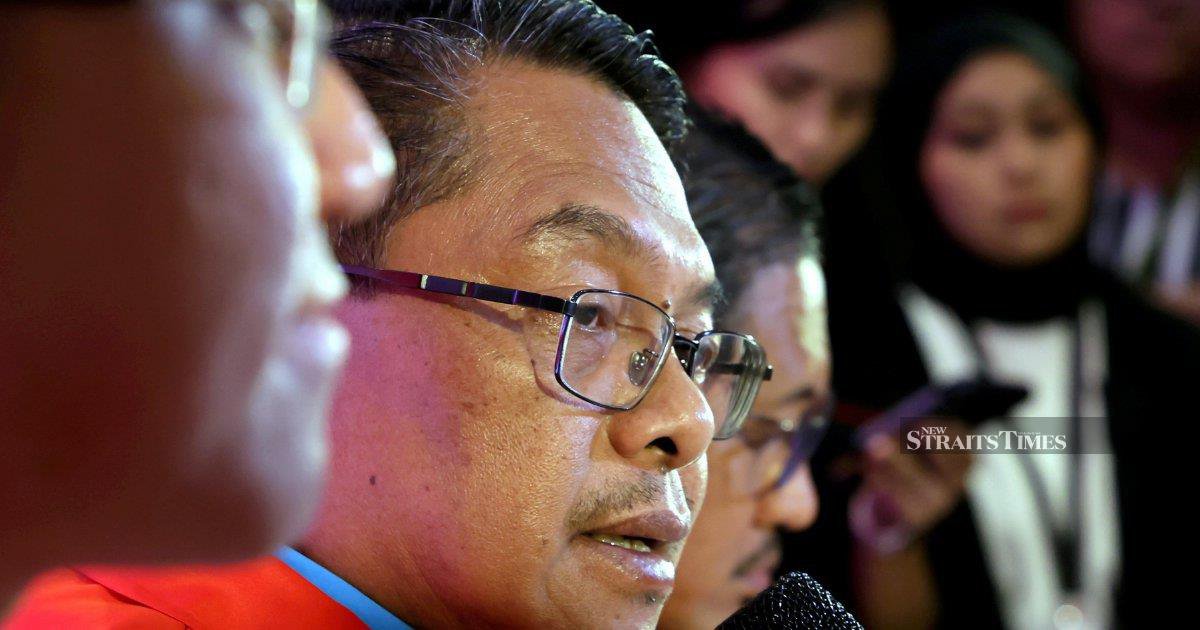
The longstanding question of whether Sabah and Sarawak should receive enhanced representation in Parliament remains actively contested within ongoing Malaysia Agreement 1963 discussions, with the federal government's point person on the matter confirming the proposal has not been shelved. Datuk Mustapha Sakmud, Minister in the Prime Minister's Department responsible for Sabah and Sarawak Affairs, indicated that the idea of lifting the two East Malaysian states' collective share of parliamentary seats to 35 per cent continues to occupy space in these high-level constitutional negotiations.
The significance of this development lies in its confirmation that the federal administration maintains engagement with what amounts to a substantial constitutional restructuring proposal. Currently, Sabah and Sarawak together hold a considerably smaller proportion of the 222 parliamentary seats, meaning the 35 per cent proposal would fundamentally alter the balance of power within the legislature and elevate the two states' political weight in national decision-making. Such a shift would represent one of the most consequential amendments to Malaysia's federal architecture since the country's 1963 formation through the Malaysia Agreement.
The Malaysia Agreement 1963, the foundational document that brought Sabah and Sarawak into the Malaysian federation, has long been a flashpoint for regional grievance and aspiration. Political leaders and civil society in both states have repeatedly contended that the agreement's original terms granted them greater autonomy and prominence than the federal system has subsequently allowed. These negotiating discussions can thus be understood as an attempt to recalibrate the relationship between Kuala Lumpur and the two East Malaysian capitals, reflecting persistent dissatisfaction with the status quo.
Sabah and Sarawak's push for enhanced parliamentary representation resonates across the region as a broader quest for federalism that respects genuine power-sharing rather than centralisation. Malaysian observers will recognise that the proposal directly addresses perennial complaints from both states about their relative marginalisation in federal politics despite contributing substantially to the nation's resource wealth, particularly through petroleum revenues and timber exports. An increase to 35 per cent would grant each state roughly 39 seats under current arrangements, effectively tripling their combined current strength.
The fact that discussions continue rather than reaching closure suggests several possible interpretations. One reading is that federal negotiators acknowledge the legitimacy of the states' historical claims but remain cautious about the domestic political implications of such major constitutional change. Alternatively, the ongoing dialogue may reflect the complexity of implementing such redistribution, which would require constitutional amendment and would necessarily diminish the proportional weight of Peninsular Malaysian states. Understanding these negotiations requires appreciating that any increase for Sabah and Sarawak effectively represents a reduction in relative terms for the peninsula's 13 states and federal territories.
The timing of Mustapha Sakmud's confirmation is noteworthy, coming as Southeast Asia's political landscape continues evolving and as states increasingly assert claims to resource sovereignty and regional autonomy. The Sabah and Sarawak initiative sits within this broader regional context, where subnational governments across the Association of Southeast Asian Nations increasingly demand greater voice in national affairs. Malaysia's experience may therefore carry lessons for federal systems throughout the region grappling with similar centre-periphery tensions.
For Malaysian investors and businesses, these constitutional negotiations carry tangible implications. Enhanced parliamentary representation for the two states could translate into greater policy influence over issues ranging from environmental regulation and resource extraction to infrastructure investment and financial allocation. Corporate entities operating in Sabah and Sarawak would need to monitor these discussions closely, as political shifts invariably affect regulatory frameworks and business conditions.
The proposal also touches upon identity and recognition concerns that transcend simple arithmetic about legislative seats. Many Sabahans and Sarawakians view increased parliamentary representation as symbolic recognition of their states' distinct political status within the federation and acknowledgement of their contributions to Malaysia's development. From this perspective, the numbers matter less than what they signify about the federation's commitment to honouring the 1963 agreement's original spirit.
Progressions in these talks will likely prove gradual, given the constitutional obstacles and competing interests involved. Any concrete outcome would require broad consensus among federal and state politicians, a condition historically difficult to achieve on issues touching upon fundamental constitutional arrangements. Nevertheless, the minister's public confirmation that discussions continue suggests neither side wishes to abandon this avenue for addressing longstanding grievances.
The pathway forward likely involves sustained negotiation encompassing not merely the seat numbers but also related questions concerning state autonomy, resource rights, and the interpretation of the original Malaysia Agreement. Whether substantial movement occurs during the current political cycle remains uncertain, but the maintenance of dialogue itself represents progress compared to periods when these issues received minimal official attention. For Malaysian observers watching this carefully, the coming months will be instructive about whether genuine constitutional recalibration might eventually follow decades of discussion.

