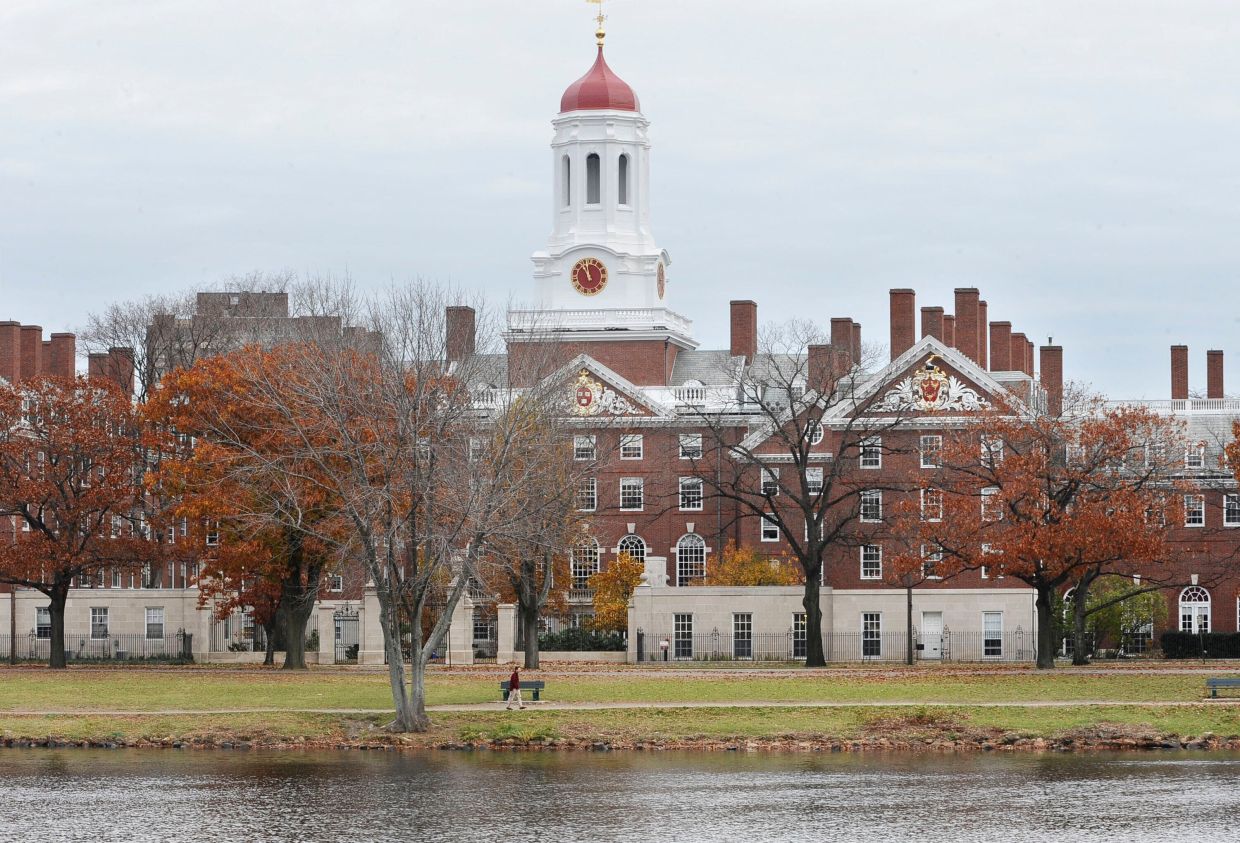
The United States Department of Defense has instructed thirty leading American universities to undertake comprehensive audits of their academic and research connections with foreign entities deemed security concerns, with Harvard University and the Massachusetts Institute of Technology among those receiving formal notifications. The directive emerged following Pentagon communications confirmed by an American official speaking to the Associated Press, with the administrative burden now falling on institutions to demonstrate compliance within a tight deadline.
The scope of affected institutions reflects the breadth of American higher education's engagement with international research networks. Beyond Harvard and MIT, the list encompasses prestigious centres of learning such as Johns Hopkins University, Cornell University, Duke University, Georgetown University, New York University, and multiple University of California campuses including Berkeley, Los Angeles, and San Diego. The Pentagon's approach has extended across geographic and disciplinary boundaries, encompassing universities in states ranging from Texas to North Carolina, Oklahoma to Illinois, underscoring the nationwide implications of this security initiative.
Universities receiving these orders face an August 31 deadline to complete detailed reviews examining their academic, financial, and investigative arrangements with foreign "entities of concern." Institutions must assess whether sensitive research or technologies subject to export controls have been inadvertently exposed through collaborative arrangements, and subsequently implement remedial measures. These corrective actions may involve the complete termination of existing partnerships and research agreements, potentially disrupting decades-old international academic cooperation frameworks that have traditionally underpinned America's position as a global research leader.
Non-compliance carries significant financial consequences that extend far beyond any individual institution. Universities that fail to meet the Pentagon's requirements risk losing access to future federal research funding—a penalty that could prove catastrophic for institutions dependent on government grants to support their scientific and academic missions. This enforcement mechanism transforms what might otherwise be viewed as a bureaucratic review into a consequential policy tool with immediate institutional ramifications.
The Pentagon's directive references foreign institutions catalogued under Section 1286 of the 2019 National Defence Authorisation Act, alongside organizations the department characterizes as "rebranded Confucius Institutes." An updated list released recently identified one hundred thirty academic and research institutions internationally that the Pentagon considers potential research security risks. However, the Pentagon has remained conspicuously silent regarding the evidentiary basis for selecting these thirty specific universities—whether officials uncovered concrete evidence of technology transfers and violations, or whether the selection reflected the mere existence of relationships with listed institutions.
For Malaysia and Southeast Asia, this American regulatory action carries broader implications regarding research collaboration patterns and technology governance frameworks across the region. Malaysian universities and research institutions maintain their own partnerships with American counterparts, and any fundamental reshaping of how American universities conduct international research will inevitably influence collaborative opportunities for Malaysian researchers seeking partnerships with top-tier US institutions. The audit requirements may prompt American universities to develop more restrictive protocols for international research participation, potentially affecting researchers from countries outside China who might face additional screening requirements.
The American Council on Education, which represents US university and college presidents and participated in developing the Pentagon's risk assessment framework, expressed displeasure at the announcement's apparent implications. Vice-President Sarah Spreitzer characterized the directive as suggesting institutional wrongdoing without substantiation, noting that universities had collaborated actively with federal authorities on research security matters and had voluntarily reduced ties with institutions appearing on the Pentagon's list. She highlighted the retrospective nature of the audit burden—universities face accountability for collaborations that preceded the restrictions and were undertaken in good faith before these relationships were formally identified as security concerns.
Beijing has responded to these audits through its embassy in Washington, characterizing American actions as an excessive expansion of national security rhetoric that politicizes ordinary scientific and educational exchange. Chinese officials contend that scientific progress fundamentally requires openness and international cooperation, and that restricting normal research engagement ultimately disadvantages American researchers and institutions alongside their Chinese counterparts. This diplomatic tension reflects deeper disagreements about the balance between security protection and research freedom.
Congressional investigations have provided the investigative groundwork underlying these Pentagon audits. Representative John Moolenaar's committee has documented that numerous universities on the audit list appeared previously in congressional research-security investigations, with particular focus on collaborations involving Chinese military-linked institutions, participation in China Scholarship Council-supported programmes, and co-authorship arrangements on federally funded research between American and Chinese researchers. Harvard University drew specific congressional scrutiny following a Republican-led investigation alleging that Harvard-affiliated researchers had co-authored more than one hundred forty papers with researchers connected to Chinese military institutions. While Harvard has not faced criminal accusations and the congressional findings represent committee assessments rather than legal determinations, these investigations substantially influenced Pentagon decision-making.
The compressed timeline for completing audits has drawn implicit criticism from university leaders concerned about the practical feasibility of comprehensive institutional reviews within two weeks. The Pentagon has not publicly articulated rationales for withholding institutional identities while simultaneously imposing such tight compliance deadlines. This combination of secrecy and urgency has created challenging circumstances for university administrators tasked with mobilizing their institutions' compliance infrastructure while simultaneously managing public relations dimensions of the controversy.
For regional observers in Southeast Asia, these developments signal an intensifying American focus on research security that may eventually extend beyond immediate China-related concerns toward broader international collaboration governance. As American universities refine their international research protocols, Southeast Asian institutions should anticipate that proposed partnerships with American counterparts may encounter additional institutional review requirements, enhanced disclosure obligations, and potentially more restrictive arrangements than previously characterized long-standing academic relationships. The shift reflects a fundamental recalibration of how American higher education balances its traditional internationalism against emerging national security frameworks.

