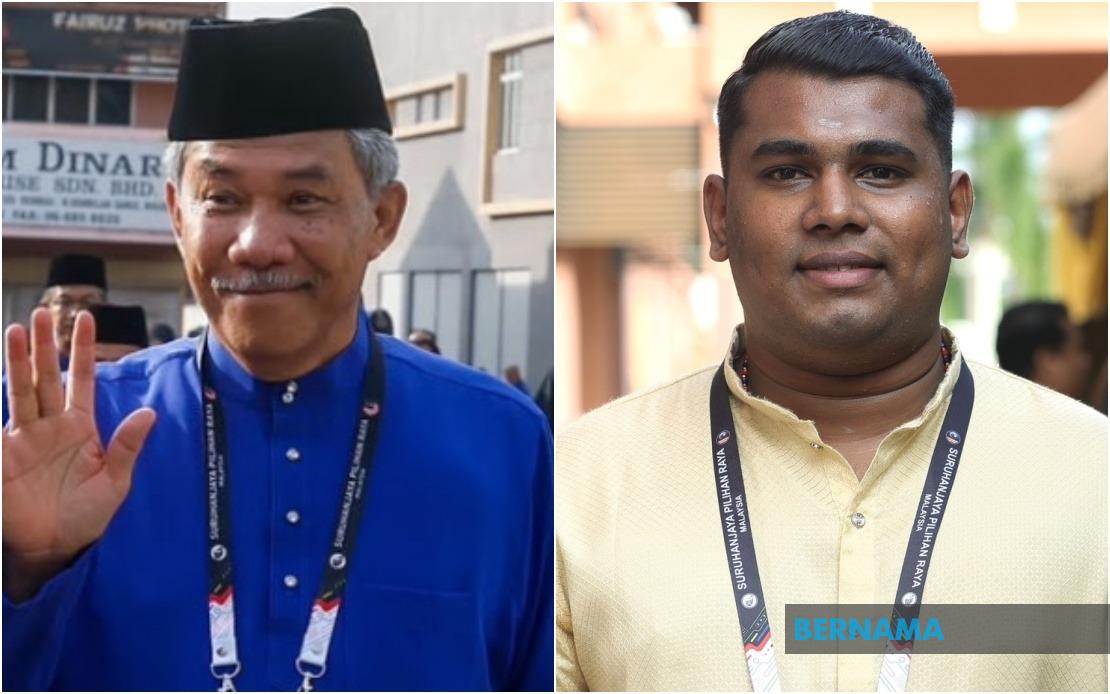
Malaysia's upcoming 16th Negeri Sembilan state election reveals a striking generational divide among candidates, with 23-year-old M. Leevineshwaraan emerging as the race's youngest hopeful. The Bersatu representative is mounting an ambitious challenge in the five-cornered contest for the Sri Tanjung state seat, seeking to convince voters to embrace his political vision despite his youth and relative inexperience in electoral contests. His candidacy signals the broader Malaysian political landscape's gradual embrace of younger political voices, though his path to victory appears daunting against an entrenched incumbent.
Leevineshwaraan faces a formidable opponent in incumbent Datuk Dr G. Rajasekaran of Pakatan Harapan, who decisively won the seat in the previous election with a commanding 3,996-vote majority. This substantial margin suggests PH has built considerable organisational strength and voter loyalty within the constituency, presenting a significant hurdle for any challenger regardless of age. The five-way configuration of this race adds another layer of complexity, fragmenting the anti-PH vote and potentially working against Leevineshwaraan's prospects unless Bersatu can consolidate support among specific voter demographics. The Sri Tanjung seat encompasses part of the Port Dickson constituency, where 19,590 registered voters will determine the outcome, a moderate-sized electorate where targeted campaigning could theoretically prove decisive.
Leevineshwaraan's record as the youngest candidate builds upon a pattern established in the previous cycle. During the 15th state election in 2023, Muhammad Syakir Fitri Sadri held this distinction as an Independent candidate contesting Paroi at just 25 years old, demonstrating that youthful ambition has begun penetrating Malaysia's state electoral contests. The progression from Syakir to Leevineshwaraan suggests Malaysian political parties, particularly opposition-aligned formations, recognise the necessity of attracting younger blood into their ranks to counter perceptions of organisational stagnation. However, the two-year gap and slight age decrease between these youngest candidates also indicates that youth candidacy remains statistically rare, with most party machines still gravitating toward more established political personalities.
At the opposite end of the demographic spectrum, Negeri Sembilan's 16th election showcases distinguished senior statesmen vying for continued influence. Both Barisan Nasional deputy chairman Datuk Seri Mohamad Hasan and Pakatan Harapan's Abd Latif A Tambi have reached 70 years of age, marking them as the election's senior-most contestants. Mohamad defends the Rantau seat within the Rembau parliamentary constituency, which encompasses 34,831 eligible voters, while Abd Latif contests in Gemencheh, situated within Tampin's parliamentary division and drawing from a voter pool of 24,916. Both candidates face two-way contests rather than multi-cornered battles, potentially affording them clearer pathways to victory based on their demonstrated ability to consolidate support within their respective political blocs.
The elevation of Mohamad Hasan and Abd Latif to the status of eldest contestants represents a modest change from the previous electoral cycle. During Negeri Sembilan's 15th state election, Bujang Abu stood as an Independent candidate at 72 years old, maintaining the precedent that septuagenarians regularly compete in Malaysian state politics. Bujang's absence from this year's contest stems from administrative rather than electoral considerations; he failed to submit documentation required by the Election Commission for candidacy verification. This institutional barrier underscores how regulatory frameworks can inadvertently reshape candidate pools, preventing experienced figures from contesting even when they remain politically motivated and capable.
The gender composition of this election's candidate roster indicates incremental progress toward greater female representation in Malaysian state politics, though the overall numbers reveal substantial work remains necessary. Nine of the 103 candidates contesting across all state seats are women, representing approximately 8.7 per cent of the total field. Pakatan Harapan leads the parties in fielding female candidates, presenting four women among their slate, while other coalitions have not disclosed proportionally similar commitments to gender parity. The increase from eight women among 83 candidates in the previous election to nine among 103 represents numerical growth, though the proportional rate has essentially remained flat, suggesting that expanded candidate numbers have not automatically translated into expanded opportunities for women politicians.
The Electoral Commission's scheduling arrangements provide candidates and voters with clear timelines for mobilisation and participation. Early voting will occur on July 28, enabling security personnel, healthcare workers, and others requiring advance balloting to cast their votes outside the main polling day. The official polling day of August 1 follows three days later, providing a compressed campaign period that will test candidates' ground operations and resource deployment efficiency. This condensed timeframe particularly disadvantages candidates with limited campaign machinery or financial resources, potentially favouring established parties with existing voter databases and ground networks. For younger candidates like Leevineshwaraan, the rapid pace may prove challenging without substantial party support infrastructure.
Negeri Sembilan's electoral geography comprises 36 state seats distributed across multiple parliamentary divisions, each presenting distinct demographic and political characteristics. The Port Dickson constituency, encompassing Sri Tanjung and four neighbouring state seats, represents a mixed urban-rural environment where Chinese and Indian voters constitute significant demographic blocks alongside Malay-Muslim communities. This diversity typically produces competitive elections where no single party can assume automatic victory, requiring candidates to appeal across communal lines through targeted messaging on economic development, infrastructure provision, and community-specific grievances. The concentration of 19,590 voters in Sri Tanjung alone provides Leevineshwaraan with a sufficiently large electorate to theoretically construct winning coalitions through effective targeting.
The contrast between Leevineshwaraan's youthful candidacy and the seasoned experience of figures like Mohamad Hasan and Abd Latif illuminates ongoing tensions within Malaysian political formations regarding generational transition. Established parties face inherent contradictions between retaining experienced figures whose name recognition and political networks remain valuable assets and promoting younger candidates who might invigorate party brands and appeal to demographic cohorts increasingly disengaged from traditional politics. Bersatu's decision to field Leevineshwaraan suggests calculated risk-taking, positioning the party as forward-thinking while potentially sacrificing electoral advantage in a specific seat where incumbency and established relationships might favour more conventional candidacies. The outcome in Sri Tanjung will likely influence subsequent decisions by Malaysian political parties regarding youth candidate deployment in future elections.
Malaysian state elections traditionally function as barometers of electoral mood affecting national political dynamics, with results in Negeri Sembilan potentially signalling broader shifts in voter sentiment that could reverberate through the federal political arena. A strong showing by Pakatan Harapan would reinforce perceptions of coalition momentum, while Barisan Nasional gains would suggest the coalition's capacity to reverse recent electoral setbacks. Bersatu's performance will particularly attract scrutiny given the coalition's recent repositioning within Malaysia's political landscape and questions regarding its capacity to retain and expand electoral support. The presence of diverse candidate profiles, from Leevineshwaraan's relative political newness to Mohamad Hasan's decades of ministerial experience, ensures that voters will fundamentally be evaluating not merely party platforms but competing visions regarding how Malaysia's political institutions should balance experience and innovation, established relationships and fresh perspectives, continuity and transformation.

