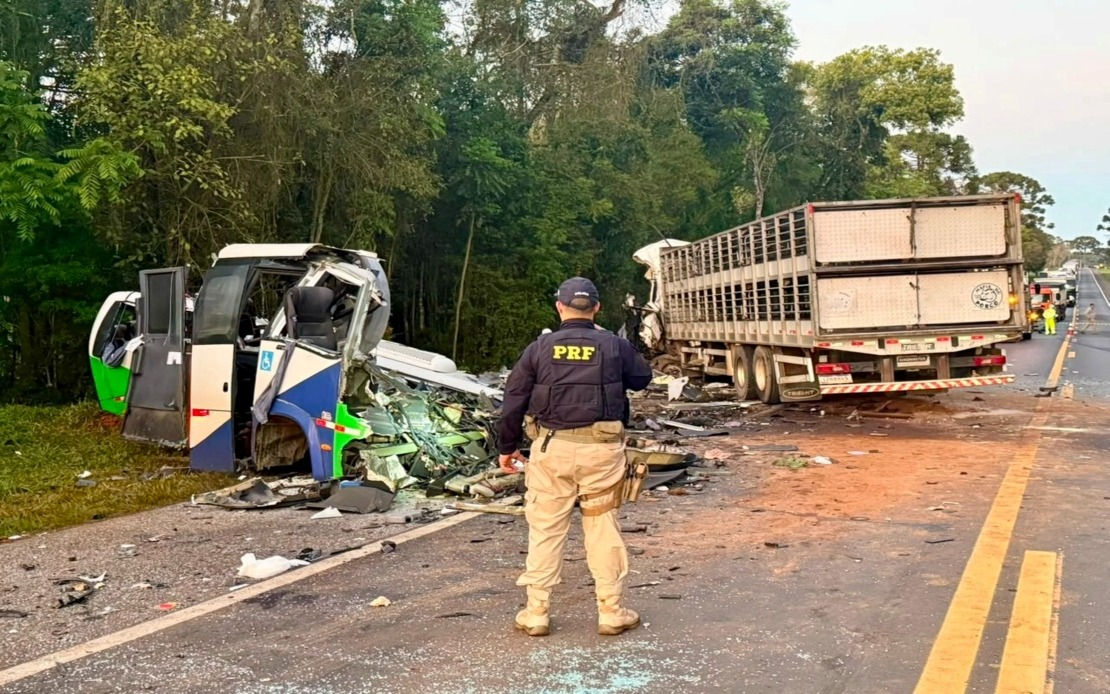
A devastating collision between a medical transport minibus and a heavy lorry has claimed 23 lives in southern Brazil, marking one of the deadliest road accidents in the region in recent years. The crash occurred early on Wednesday near Ipiranga in the Campos Gerais region of Paraná state, when the two vehicles met in a tragic head-on impact on a national highway. Preliminary investigations suggest that the lorry drifted across the centreline into oncoming traffic before striking the minibus, though authorities continue to examine the precise sequence of events that led to the catastrophe.
The victims comprised 13 women, eight men, and two children, according to the Paraná State Secretariat for Public Security. The toll included the driver of the lorry, underscoring the severity of the collision. An additional five passengers sustained injuries and were transported to nearby medical facilities for treatment. The minibus itself was operated by the regional health service and had been en route to hospitals in the metropolitan Curitiba area, approximately 200 kilometres from the accident site, when the tragedy unfolded. The vehicle's primary purpose was to facilitate patient transport between smaller regional facilities and major urban medical centres, a role that has become increasingly essential across Brazil's vast southern territories.
The accident site was cordoned off completely for an extended period as emergency services, forensic teams, and investigating officers processed the scene and worked to recover victims. The closure of the highway created significant disruption to traffic flows in the region, as rescue operations and evidence collection took precedence over vehicular movement. This section of the national road network, which serves as a vital transportation corridor connecting various southern Brazilian regions, proved challenging for emergency responders given the scale of the incident and the rural nature of the location near Ipiranga.
Brazil's infrastructure in many outlying areas presents ongoing safety challenges for road users. The highway in question operates as a two-lane thoroughfare in numerous sections, limiting capacity and offering minimal physical separation between opposing traffic streams. Such constrained road designs, combined with heavy commercial vehicle usage and extended driving distances across sparsely populated areas, create conditions where driver fatigue and momentary lapses in concentration can have catastrophic consequences. The particular road geometry and traffic density at the accident location likely contributed to the severity of the collision once the lorry began its apparent drift across the centre line.
The incident has sparked renewed focus on road safety practices and vehicle maintenance standards across Brazil's transport sector. Long-distance professional drivers operating heavy vehicles on national highways face demanding schedules that can elevate the risk of accidents through fatigue and reduced vigilance. The minibus operator, serving as a public health transport service, operates under different regulatory frameworks than commercial freight operators, yet both vehicle types shared the same vulnerable roadway when disaster struck. Questions regarding speed management, driver rest protocols, and vehicle condition monitoring inevitably arise following such catastrophic events, prompting scrutiny of enforcement mechanisms along Brazil's national highway system.
In response to the tragedy, the Paraná state government declared three days of official mourning, acknowledging the profound loss experienced by the affected families and the broader community. This formal gesture reflects the shocking nature of the accident and the significant impact it has had on public consciousness regarding road safety. Regional authorities will face pressure to review safety measures and potentially implement infrastructure improvements along dangerous sections of national highways, particularly those serving remote and rural populations dependent on inter-city medical transport services.
For regional observers in Southeast Asia, the incident underscores challenges that mirror those faced across developing economies where road networks carry ever-increasing traffic volumes despite infrastructure constraints. Malaysia, similarly positioned as a developing nation with extensive highway networks serving both urban and rural populations, can draw lessons from such incidents regarding the importance of consistent road safety enforcement, investment in two-lane highway upgrades, and comprehensive driver training programmes. The particular vulnerability of medical and social service vehicles operating on demanding long-distance routes deserves specific attention from transport regulators across the region.
The investigation into the precise cause of the accident remains ongoing, with authorities examining factors including vehicle mechanical condition, driver behaviour, visibility conditions, and potential external contributors. Determining whether driver error, mechanical failure, or environmental factors precipitated the lorry's drift into the opposing lane will be crucial for understanding how similar incidents might be prevented in future. The comprehensive nature of such investigations often takes weeks or months to complete, as forensic teams analyse evidence, interview survivors and witnesses, and reconstruct the vehicle movements based on physical markers and impact patterns.
The loss of life in this incident represents a tragic reminder of the inherent risks associated with road transportation in countries still developing their infrastructure and safety systems. The death of two children alongside the adult victims adds profound emotional weight to the disaster, affecting not only immediate family members but resonating throughout the broader Brazilian society. Such events frequently catalyse policy discussions and safety advocacy campaigns, particularly when they involve vulnerable populations like patients being transported for medical care.

