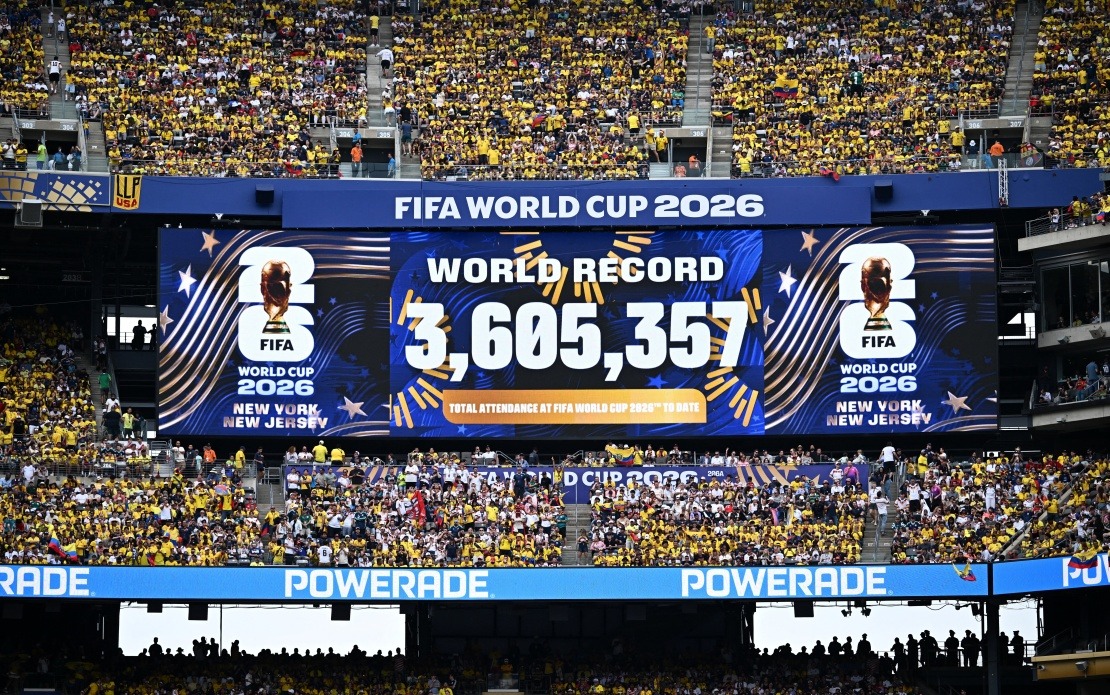
The 2026 FIFA World Cup has etched its name into sports history by becoming the best-attended tournament ever held, with attendance officially surpassing the long-standing 1994 record of nearly 3.6 million spectators. The historic milestone was announced on Thursday during the match between Germany and Ecuador in East Rutherford, New Jersey, with confirmation coming through FIFA via the Emirates News Agency. As the announcement was made, giant screens throughout the stadium broadcast the new all-time attendance figure of 3,605,357, prompting enthusiastic applause from the thousands of supporters witnessing the momentous achievement firsthand.
The significance of this record becomes even more apparent when considering that the tournament still has 48 matches remaining. Based on current attendance trends, football observers project that the final tally could nearly double the previous benchmark set three decades ago. This projection underscores the unprecedented appetite for World Cup football in North America and the effectiveness of the 16-city hosting arrangement across the United States, Canada, and Mexico.
The 1994 World Cup, which previously held the attendance record, featured a more compact format with only 52 matches total. The 2026 tournament, by contrast, encompasses an expanded 80-match schedule featuring 32 teams competing across multiple nations. This structural change alone would naturally allow for higher cumulative attendance, yet the achievement demonstrates far more than simple arithmetic. The nearly complete stadium occupancy across venues reflects genuine enthusiasm from North American fans for international football, a demographic that has historically shown variable interest in the sport.
Data compiled from the tournament shows that stadiums are operating at more than 99 percent capacity on average, an extraordinary utilisation rate that speaks volumes about demand management and the draw of global football's premier competition. Whether fans are attending matches featuring traditional powerhouses or less-prominent teams, venues are consistently packed to near-capacity. This uniform attendance pattern across different match-ups suggests that the World Cup brand itself remains a powerful draw, transcending the typical dynamics of club football where fixture appeal varies considerably based on participating teams.
FIFA President Gianni Infantino commented on the achievement, framing it within the broader context of football's unifying force. Infantino characterised the record as a reflection of the deep, global passion that supporters across continents harbour for the sport and its capacity to unite people from diverse backgrounds in shared moments of celebration and joy. He highlighted that the atmosphere created across the 16 host cities and their respective stadiums has been exceptional, suggesting that the tournament has met or exceeded expectations in terms of fan experience and engagement.
For Malaysian sports enthusiasts and Southeast Asian football followers, this record carries particular relevance. It demonstrates the commercial viability and popular appeal of international football tournaments in the modern era, potentially influencing how regional competitions are developed and promoted. The success of the 2026 World Cup in generating unprecedented attendance figures may serve as a blueprint for other international sporting bodies considering expansion or reconfiguration of their tournament formats.
The distributed hosting model adopted for 2026—spreading matches across three nations rather than concentrating them in a single country—appears to have been a strategic success. This approach reduced travel distances for supporters in different regions and created multiple epicentres of World Cup activity, likely contributing to the exceptional attendance. Such a model could inform future international tournaments, particularly those seeking to balance logistical challenges with maximising fan accessibility.
The achievement also reflects broader economic and social factors. The investment in new or upgraded stadium infrastructure across the three host nations has provided venues capable of accommodating international-standard matches whilst maintaining high safety and comfort standards. Coupled with improved transportation networks and accommodation options in participating cities, these infrastructure improvements have facilitated attendance on a scale previously unachievable.
Looking forward, the 2026 tournament appears positioned to reshape expectations around World Cup economics and fan engagement. The attendance record will likely translate into substantial revenue streams through gate receipts, merchandise, and hospitality packages. Broadcasting viewership figures, which typically correlate with in-stadium attendance, will probably reflect similarly strong performance, benefiting both FIFA and local broadcasting rights holders across the participating nations.
For teams and players competing in the tournament, the consistently full stadiums create an electric atmosphere that can significantly influence match dynamics. The roar of packed crowds, the visual spectacle of uniformly filled stands, and the sense of occasion all contribute to making the 2026 World Cup a unique experience for participants and observers alike. As the tournament progresses toward its conclusion, maintaining these attendance levels will cement the 2026 edition as a watershed moment in World Cup history and potentially reshape how major international sporting events are conceived and executed in the years ahead.

