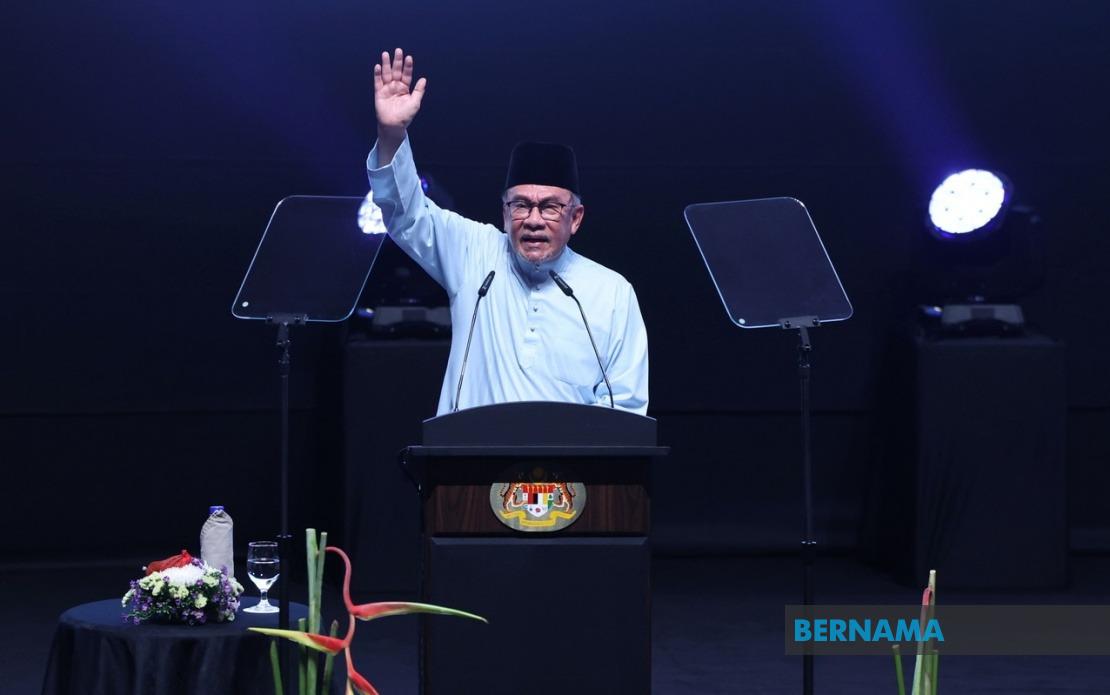
The Prime Minister's 2026 National Day address ceremony has been repositioned to the Putrajaya International Convention Centre (PICC), with proceedings commencing at 2 pm, the Ministry of National Unity confirmed on Thursday. The decision to shift the event from its traditional venue at Dataran Merdeka in Kuala Lumpur reflects broader concerns about environmental conditions and public welfare during the national celebration.
Authorities justified the venue change and revised timing after consultations on how best to safeguard attendees. The Ministry of National Unity stressed that the modifications prioritise participant safety and wellbeing alongside operational efficiency for what remains a ceremonially significant occasion. By relocating to an indoor facility with climate control, organisers can better manage environmental challenges while maintaining the event's ceremonial dignity.
The Ministry of National Unity's statement underscored the deeper symbolic importance of the occasion. Officials characterised the Prime Minister's address as a vital opportunity for the MADANI government to articulate its vision for national development, reinforce collective commitment to independence, and deepen patriotic sentiment among Malaysians. The platform allows leadership to articulate governance priorities whilst cultivating shared values around progress and stability.
The haze crisis prompted this rescheduling. The Malaysian Meteorological Department had predicted severe atmospheric pollution across multiple regions through the end of August, with particularly acute concentrations expected in Johor, Melaka, Negeri Sembilan, Selangor, Kuala Lumpur and Putrajaya itself. Sabah faced additional warnings of deteriorating conditions from late August onward. These forecasts presented genuine challenges for outdoor ceremonies expecting large crowds.
For Malaysians accustomed to National Day festivities, the transition represents a practical adaptation to recurring seasonal challenges. The haze phenomenon, often linked to regional transboundary pollution from agricultural burning in neighbouring countries, has become an annual complication for outdoor events and public gatherings. Moving celebrations indoors has become an increasingly familiar contingency across Southeast Asia.
The Ministry's invitation to all Malaysians to participate emphasises the inclusive nature of National Day observance. Officials framed attendance as an opportunity to collectively celebrate national sovereignty whilst demonstrating the values of intercommunal harmony, pluralistic acceptance and civic responsibility that the government seeks to embed in national consciousness. Such rhetoric attempts to position the ceremony beyond mere formality into expressions of genuine national cohesion.
The Working Committee for National Day and Malaysia Day celebrations, operating under the Ministry of Communications, had previously determined that relocating from Dataran Merdeka represented the most viable solution to persistent air quality deterioration. The decision emerged from coordinated consultation across multiple agencies concerned with public health, ceremonial protocol and operational logistics. This demonstrates how environmental considerations increasingly influence even symbolic state occasions.
Putrajaya's selection as the new venue carries its own significance. As Malaysia's purpose-built administrative capital, the city embodies contemporary governance infrastructure and planning principles. The PICC specifically provides substantial capacity and controlled environments essential for hosting high-profile state events with thousands of participants. The location thus reinforces symbolic associations between ceremonial leadership displays and institutional modernity.
For Malaysian observers monitoring broader governance trends, this adjustment illustrates how environmental pressures increasingly constrain planning for major public events. Climate-related challenges—whether transboundary haze, flooding, or extreme temperatures—have become routine considerations for event organisers at all levels. The normalisation of such contingencies reflects shifting environmental realities facing the region.
The rescheduled timing at 2 pm also merits consideration. Earlier ceremonies risk greater heat exposure during peak afternoon conditions, whilst evening slots complicate outdoor lighting and security arrangements. The afternoon scheduling at PICC balances practical operational needs with participant comfort, particularly important given Malaysia's tropical climate and the potential for extended ceremonies drawing crowds of varying ages and physical capacities.
Civil society observers have increasingly scrutinised how national ceremonies balance symbolic expression with practical accessibility. The shift indoors potentially affects the visual spectacle and public participation dynamics traditionally associated with Dataran Merdeka's expansive open spaces. However, enhanced climate control and structured seating arrangements may improve viewing quality and participant comfort compared to exposure to deteriorating air quality.
Looking forward, the 2026 National Day observance represents an opportunity for Malaysian leadership to model adaptive governance amid environmental constraints. How successfully authorities manage the relocated ceremony—maintaining ceremonial significance whilst accommodating environmental realities—may inform approaches to future major public events throughout the region facing similar transboundary pollution challenges. The message conveyed will extend beyond patriotic rhetoric to demonstrate institutional competence in serving public welfare.

