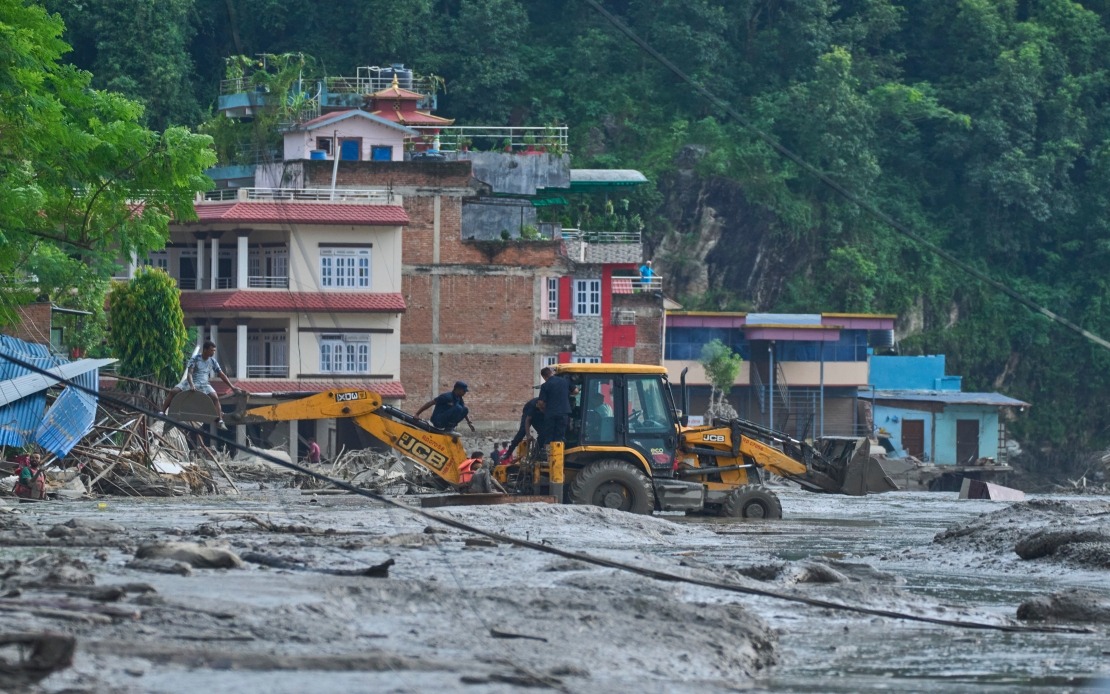
A devastating flash flood in Nepal's Rasuwa district has left 17 Malaysians among the hundreds of foreign nationals unaccounted for, according to updates from Nepal's tourism board. The disaster, which struck on Wednesday morning, has triggered an immediate international search and rescue response as authorities grapple with locating tourists and local residents swept away by the surging waters. The Malaysian Foreign Ministry subsequently revised the initial count, noting that 11 Malaysian nationals believed to be in the affected area had lost contact with family and friends following the catastrophic event.
The flood, triggered by a sudden surge in the Bhote Koshi river, unleashed a wall of water through Nepal's mountainous Rasuwagadhi-Timure area, fundamentally transforming the landscape in hours. Entire villages were inundated, roads washed away, buildings demolished, and critical hydropower infrastructure destroyed. The sheer violence of the natural disaster left little time for residents and tourists to escape, transforming what should have been a routine day in one of Nepal's key tourism corridors into a nightmare scenario that has reverberated across multiple nations.
The Malaysians reported missing were part of organized tour groups handled by Fishtail Tours and Travels, a tour operator that had arranged their itineraries through this scenic region. Tour operators and local police have been mobilized to piece together passenger manifests and contact information, attempting to determine whether the missing Malaysians are still unaccounted for or have since been located. This coordination between tourism industry professionals and law enforcement represents a critical component of the overall search operation, as tour companies maintain detailed records of their guests and their movements.
Nepal's official tourism board situation update, issued in the afternoon following the flood, painted a dire picture of the scale of the international crisis: at least 291 foreign nationals and 93 Nepalese citizens remain uncontactable. This substantial figure underscores the popularity of Rasuwa district among adventure tourists and the heavy concentration of visitors in the area at the time of the disaster. The mix of missing persons reflects Nepal's significance as a global trekking and mountaineering destination, attracting tourists from across the world.
Indian citizens comprise the largest contingent of missing foreigners, with 142 Indians unaccounted for, including 37 Indian nationals living abroad who were visiting their homeland. Beyond the Indian and Malaysian nationals, British, South African, and American citizens are also among those who have lost contact with the outside world. The geographic diversity of the missing persons highlights how this remote area of Nepal has become an internationally significant tourism destination, drawing visitors from developed economies and neighbouring regions alike.
The Malaysian Embassy in Kathmandu has assumed a coordinating role in efforts to locate and assist its nationals. Embassy officials are working in close liaison with Nepalese government authorities, particularly the search and rescue teams being deployed across the affected districts. This diplomatic coordination is essential for ensuring that Malaysian nationals receive appropriate consular assistance and that their families back home receive timely updates. The embassy's efforts also include attempting to establish communication with survivors who may be stranded or sheltering in temporary locations.
Nepalese government rescue teams are actively engaged in search operations across the disaster zone, navigating treacherous terrain and unstable conditions created by the flood. The challenge facing rescue coordinators is formidable: the mountain landscape has been fundamentally altered by the water surge, roads are impassable, and communication infrastructure has been damaged. Rescue teams must work with limited information about the precise locations of missing persons and must account for the possibility that some individuals may have been swept considerable distances downstream from where they were initially caught by the flood.
For Malaysian readers, this disaster carries particular resonance given the substantial Malaysian tourism presence in Nepal and the country's reputation as a preferred destination for adventure travel. The incident raises important questions about tourism safety protocols in mountain regions prone to natural disasters, the adequacy of emergency communication systems in remote areas, and the responsibilities of tour operators to implement contingency plans for sudden environmental hazards. Tour companies operating in Nepal will undoubtedly face scrutiny regarding their safety briefings and emergency procedures.
The broader context of this disaster also reflects the increasing vulnerability of popular tourism destinations to climate-related extreme weather events. Flash flooding has become more frequent and intense in mountainous regions across Asia, partly attributed to changing precipitation patterns and environmental degradation. Nepal's tourism industry, whilst economically vital to the nation, operates in an inherently hazardous geography where sudden weather events can transform recreational activities into life-threatening situations within minutes.
As rescue operations continue, the focus for Malaysian authorities remains on establishing the welfare status of all 17 nationals and facilitating their evacuation if safe passage can be secured. The Foreign Ministry and embassy are urging Malaysian nationals in Nepal to maintain contact with their families and to seek assistance through embassy channels if needed. For those awaiting news of loved ones caught in the disaster, these are anxious hours as rescue teams work against time and difficult terrain to locate survivors.

