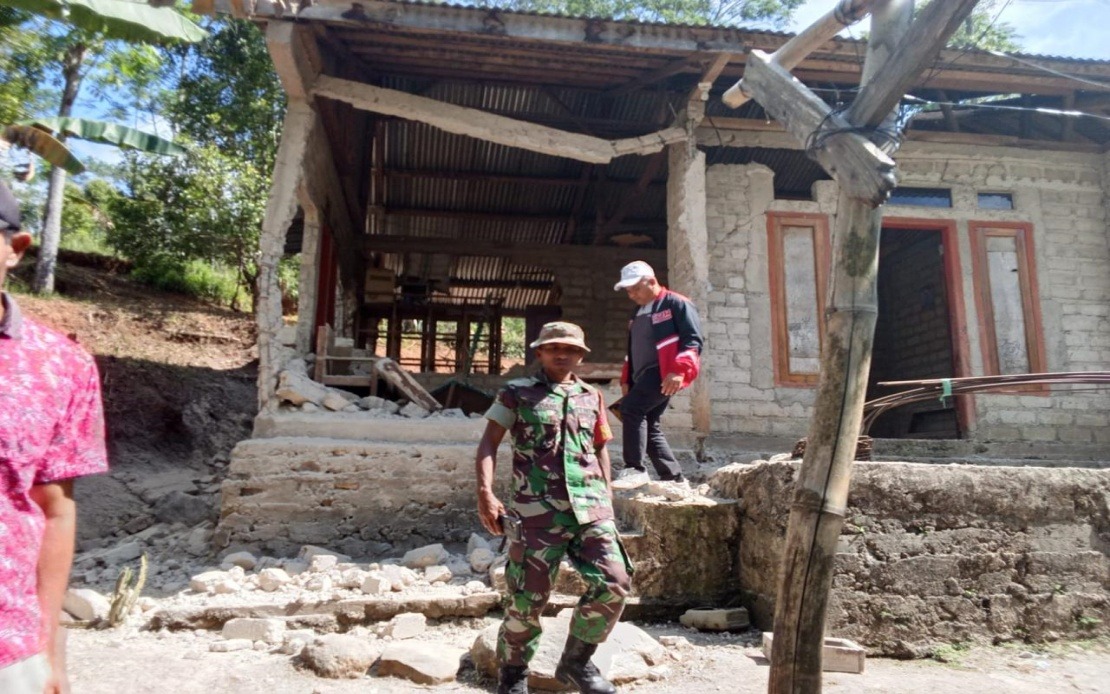
Malaysia's Foreign Ministry moved swiftly to reassure citizens on Saturday following a powerful earthquake that struck Flores Island in Indonesia's East Nusa Tenggara province early that morning. The tremor, measured at magnitude 7.7, occurred in the early hours near Mbay in Nagekeo Regency, prompting immediate consular action to account for Malaysians in the vicinity. Within hours of the quake, the ministry issued a statement confirming that contact had been successfully re-established with a party of 16 Malaysian tourists known to have been holidaying in the earthquake-affected zones.
The earthquake struck at 4.58 am local time in an area northeast of Mbay, a significant jolt given the region's geological sensitivity. The Malaysian Embassy in Jakarta, serving as the operational hub for consular services across Indonesia, prioritised locating and verifying the safety of Malaysian nationals in the disaster zone. The swift confirmation of the tourists' wellbeing came as regional authorities mobilised emergency response teams and assessed damage across the affected communities. For Malaysian families monitoring developments, the rapid communication from the Foreign Ministry provided crucial reassurance during the immediate aftermath of the disaster.
The Foreign Ministry's statement emphasised that no Malaysians had been reported injured or missing as of Saturday afternoon. This positive outcome reflected both the dispersed nature of the tourist group and fortunate circumstances regarding their locations when the earthquake struck. The embassy's ability to establish contact quickly underscored the importance of maintaining updated consular records, a point the ministry highlighted in its advisory. The confirmed safety of all 16 tourists represented a best-case scenario given the magnitude and location of the seismic event, which had prompted earthquake alerts and precautionary measures across the Indonesian archipelago.
Beyond immediate reassurances, the Foreign Ministry articulated a broader protective stance toward Malaysian citizens in the region. Officials indicated that the embassy was actively liaising with Indonesian local authorities to obtain comprehensive information about the wider situation in affected areas and to identify any other Malaysians who might require assistance. This coordination represented standard protocol for managing international emergencies, but it also reflected the reality that large numbers of Malaysian tourists visit Indonesia annually, with significant populations residing in major cities like Jakarta. The proactive engagement with local Indonesian authorities demonstrated Malaysia's commitment to safeguarding its citizens abroad through established diplomatic channels.
The ministry's advisory dispensed practical guidance for Malaysians either living in or planning travel to the earthquake zone. Residents and visitors were instructed to maintain heightened awareness, comply strictly with instructions from Indonesian emergency management officials, and avoid unnecessary movement in damaged areas. Such counsel, while routine in post-disaster communications, carried particular weight given the potential for aftershocks following a magnitude 7.7 event. The Flores Island region had experienced seismic activity previously, making the safety advisory more than formulaic caution—it reflected genuine understanding of geological risks in this tectonically active zone.
A critical element of the ministry's communication strategy centred on the e-Konsular portal, an online system enabling Malaysian citizens to register their whereabouts and maintain updated contact information with consular offices. The ministry specifically encouraged Malaysians in Indonesia to utilise this platform, highlighting how registration data had proven instrumental in rapidly locating the tourist group and confirming their safety. This emphasis on digital registration underscores an ongoing challenge for consular services: maintaining comprehensive, current records of nationals abroad is essential for effective emergency response, yet many citizens neglect to update their details. The earthquake incident served as a practical demonstration of why such registration matters for personal security.
For those requiring immediate assistance in the aftermath of the earthquake, the Foreign Ministry published specific emergency contact details. The Malaysian Embassy in Jakarta provided a dedicated emergency hotline number and email address for consular inquiries, ensuring that distressed citizens or concerned family members could reach diplomatic staff without delay. These communication channels represented the frontline of Malaysia's consular presence in Indonesia, staffed to handle urgent matters including medical emergencies, lost documentation, financial crises, and family welfare concerns arising from natural disasters. The accessibility of these services reflected Malaysia's responsibility toward its nationals abroad.
The Flores Island earthquake occurred within a broader regional context of seismic risk and tourism flows that shape Malaysia's foreign policy in Southeast Asia. Indonesia, as the region's largest nation by population and area, experiences frequent earthquakes due to its position along the Pacific Ring of Fire. Millions of Malaysian tourists visit Indonesia annually, with Flores Island—home to iconic destinations like the Komodo National Park—ranking among popular holiday destinations. The earthquake highlighted the intersection of tourism, disaster risk, and consular responsibility, issues that Malaysia's diplomatic and foreign ministry apparatus must continuously navigate.
Looking forward, the ministry committed to ongoing monitoring of the situation and pledged to provide updated public statements should developments affect Malaysian citizens. This standing undertaking reflected the standard diplomatic practice of maintaining public transparency during international emergencies while acknowledging that situations remain fluid in the hours and days following major natural disasters. The earthquake's long-term implications for tourism in the region remained unclear, but the swift response and successful confirmation of tourist safety provided confidence in Malaysia's crisis management capabilities and the functionality of consular coordination mechanisms between Malaysia and Indonesia.
The incident also underscored broader questions about emergency preparedness and disaster resilience in a region prone to seismic activity. While the immediate outcome for the 16 Malaysian tourists proved fortunate, larger earthquakes in densely populated areas could produce vastly different results. As climate change and environmental degradation intensify various disaster risks, maintaining robust consular response capabilities and promoting public awareness about registration and communication become increasingly important. The successful resolution of this particular emergency situation offered a template for how coordinated diplomatic action can protect citizens in times of crisis, even across international boundaries.

