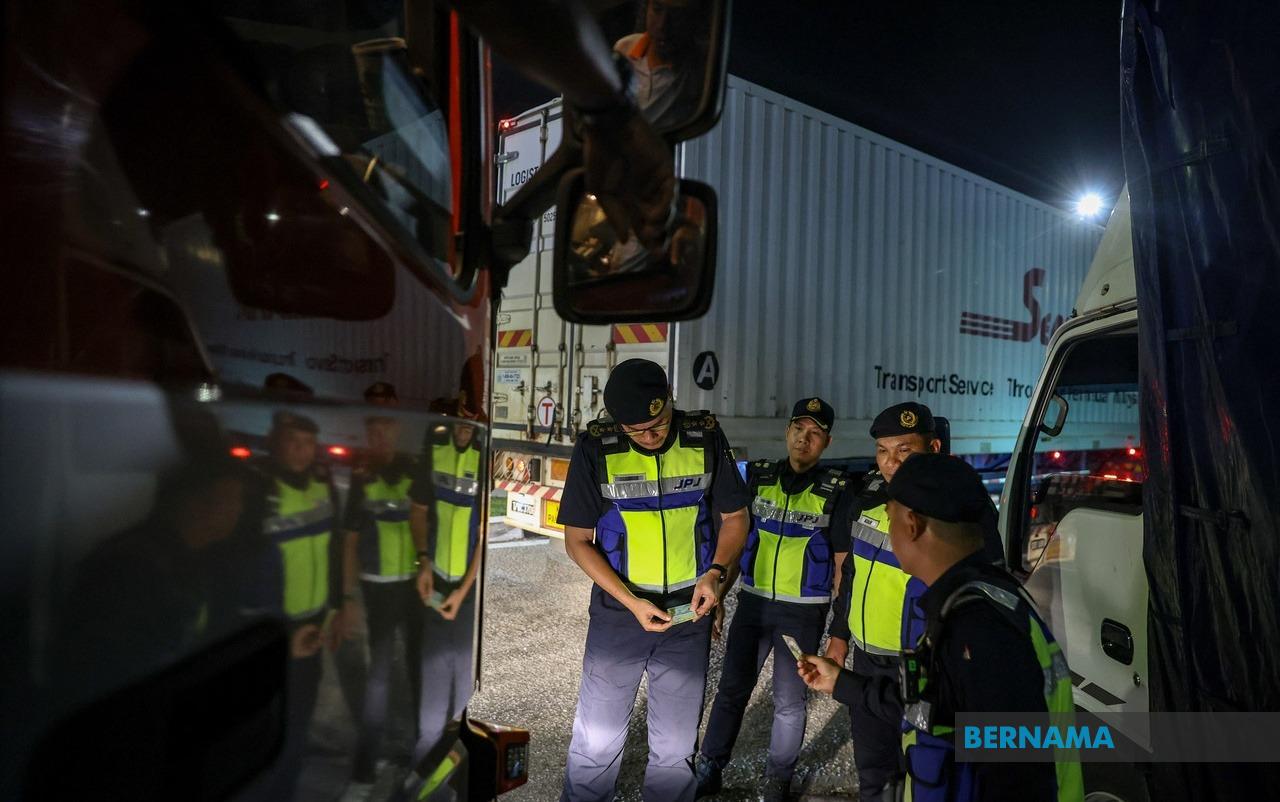
A ten-day enforcement blitz across Johor has exposed a troubling intersection between road safety and drug use, with 16 drivers of commercial and public transport vehicles found to be under the influence of illegal substances. The Johor Road Transport Department (JPJ) conducted the integrated operation in partnership with the Royal Malaysia Police (PDRM), the National Anti-Drug Agency (NADA) and PLUS Malaysia Berhad, with screenings performed at multiple high-traffic checkpoints throughout the state between July 1 and July 10.
Johor JPJ director Zulkarnain Yasin unveiled the operation's findings at a briefing held at the Pagoh Rest and Service area on the southbound highway. Of the 164 drivers who submitted to urine testing during the campaign, the positive results broke down across several substance categories: methamphetamine dominated the findings with seven cases, followed by three drivers testing positive for crystal meth or "ice," two for cannabis, and one for morphine. The results underscore the persistent challenge drug use poses to vehicle safety on Malaysian highways, where impaired driving can have catastrophic consequences for other road users.
The scale of the operation reflects a coordinated approach to addressing drug-related driving risks. Rather than relying solely on random roadside checks, authorities deployed strategically positioned screening sites across highway rest areas, JPJ enforcement stations, and bus terminals—locations where large volumes of commercial and public transport vehicles congregate. This targeting strategy appears designed to intercept the drivers most likely to be operating under the influence during long-distance journeys, when fatigue and substance use compound the dangers of inattention and impaired reaction times.
The JPJ's response to positive results carries significant professional consequences. Under Section 56(4) of the Road Transport Act 1987, drivers testing positive for drugs face suspension or revocation of their vocational licenses. For commercial drivers whose livelihoods depend on holding valid licenses, such penalties represent a severe sanction that extends beyond criminal prosecution. This licensing mechanism provides an additional layer of deterrence beyond the criminal justice system, directly targeting the privilege to operate vehicles professionally.
Beyond the drug findings, the operation revealed a much broader spectrum of compliance failures within Johor's transport sector. The JPJ recorded 707 cases of drivers operating without valid driving licenses—a fundamental legal requirement—alongside 626 instances of expired road tax and 574 cases of lapsed insurance coverage. These figures suggest systemic gaps in vehicle registration and maintenance compliance that extend far beyond drug use, pointing to either inadequate awareness among drivers or deliberate non-compliance with regulatory obligations.
The violations inventory expanded into specialized commercial vehicle requirements. The operation detected 128 cases of missing Goods Vehicle Licenses (GDL), suggesting that some freight operators are circumventing regulations designed to ensure vehicles meet safety standards for carrying goods. Additionally, 113 overloaded vehicles were identified, indicating potential violations of weight distribution limits that can compromise braking performance and structural integrity. The discovery of 30 expired driving licenses and 14 expired GVLs reveals that some operators are continuing to drive despite their authorization having lapsed—a pattern suggesting either negligence or deliberate avoidance of renewal processes.
Technical violations rounded out a troubling picture of widespread non-compliance. The operation documented 39 cases of unauthorized vehicle modifications, where alterations to vehicles had not been properly certified or registered. Thirty instances of tires failing to meet specification standards were recorded, a safety-critical issue since tire failure at highway speeds can trigger catastrophic accidents. An additional 928 technical offenses completed the tally, suggesting that vehicle maintenance standards across Johor's transport fleet may be deteriorating or that enforcement has previously been inconsistent.
For Malaysian road safety advocates, the operation demonstrates both the necessity and the feasibility of coordinated enforcement. The integration of multiple agencies—police, anti-drug authorities, and transport regulators—creates a more comprehensive oversight framework than any single department could achieve. PLUS Malaysia Berhad's participation ensures that highway infrastructure operators collaborate with enforcement efforts, potentially enabling real-time information sharing about suspicious vehicle activity or driver behavior.
The findings carry implications for Southeast Asia's broader transport security. As goods move across borders and commercial drivers operate across multiple jurisdictions, drug use among professional drivers represents a transnational safety concern. Malaysia's experience suggests that neighboring countries may face similar challenges, and the coordinated approach adopted in Johor could serve as a model for regional cooperation on transport safety standards.
For commercial transport operators in the region, the crackdown signals intensified scrutiny and suggests that compliance costs will increase. Companies must now invest more substantially in driver screening, medical fitness assessments, and maintenance standards to avoid penalties and license suspension that could cripple operations. The sheer volume of violations detected—nearly 2,900 in total—indicates that enforcement resources are being mobilized at a scale that makes non-compliance increasingly risky.
The operation also raises questions about what systemic factors enable such widespread violations. Why do so many drivers operate without proper licenses or insurance? Are registration and renewal processes too burdensome, or is enforcement too infrequent? Understanding whether non-compliance stems from regulatory friction or deliberate evasion will be crucial for policymakers designing sustainable enforcement strategies. Johor's approach of combining multi-agency operations with licensing sanctions suggests authorities recognize that criminal penalties alone have not been sufficient to ensure compliance.
Looking forward, the success of this integrated operation will depend on whether it represents a one-time enforcement push or the beginning of sustained, regular coordinated checks. Sporadic enforcement campaigns create windows of non-compliance when operations cease, whereas consistent oversight gradually shifts compliance cultures within industries. For Johor's transport sector and for Malaysian road users generally, the message is clear: regulatory scrutiny is intensifying, drug testing is now routine, and the professional consequences of non-compliance are substantial.

