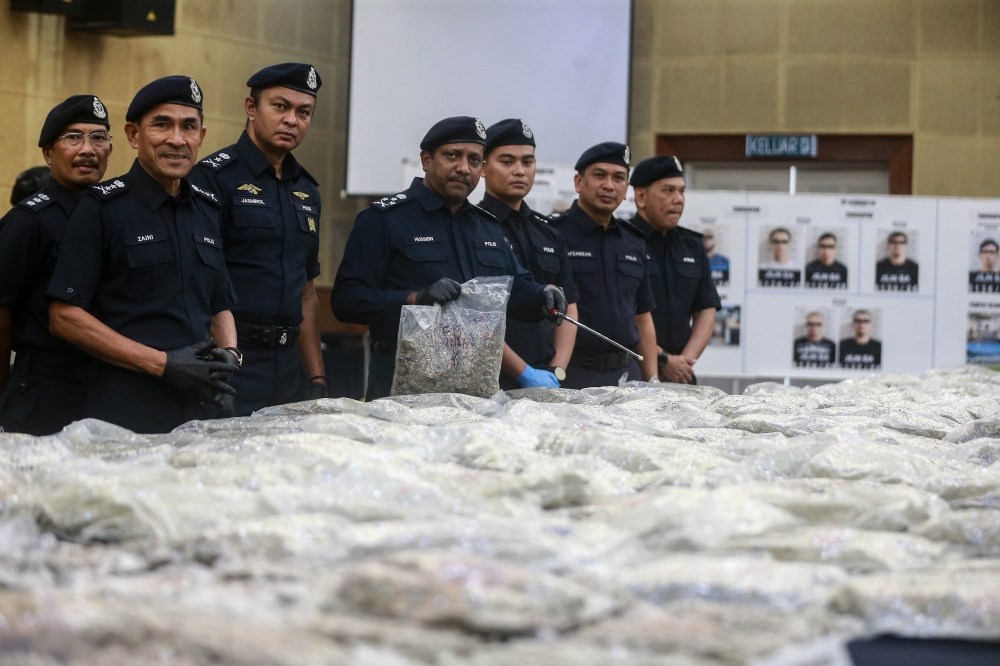
Malaysian authorities have documented a concerning trend of citizens being apprehended in overseas jurisdictions for their alleged involvement in international drug trafficking operations. Since the start of the year, no fewer than 14 Malaysians have been detained abroad on suspicion of drug smuggling activities, according to statements made by police officials. The arrests highlight the persistent vulnerability of Malaysia's international aviation infrastructure, particularly Kuala Lumpur International Airport (KLIA), as a node in transnational narcotics supply chains.
The detention of Malaysian nationals in foreign countries underscores the cross-border dimension of drug trafficking networks operating from Southeast Asia. These individuals are suspected of having utilised Malaysia's transport infrastructure to move controlled substances, suggesting a coordinated approach by organised crime syndicates exploiting the region's connectivity. The scale of the problem—14 arrests in less than eight months—indicates that law enforcement agencies have intensified their focus on tracking suspicious movement patterns linked to known smuggling routes.
KLIA's prominence in these investigations reflects its position as one of Asia's busiest aviation hubs, processing millions of passengers and tonnes of cargo annually. The airport's high throughput, while essential for Malaysia's economy and regional standing, also creates operational challenges for security personnel tasked with identifying contraband among legitimate travellers and shipments. Traffickers routinely exploit the volume and complexity of international airport operations to move drugs through concealment techniques and misdeclaration of cargo contents.
The arrest of Malaysian citizens abroad represents a critical juncture for domestic law enforcement strategy. When nationals are apprehended in foreign territories, they fall under foreign jurisdictions, complicating the Malaysian authorities' ability to investigate their networks and connections. However, these international arrests also generate valuable intelligence that can be shared between nations through bilateral cooperation frameworks and multilateral agreements such as those managed by ASEAN and Interpol.
The implications for Malaysia's international reputation are significant. Countries receiving intelligence about Malaysian nationals involved in trafficking often increase scrutiny of Malaysian passengers and cargo at their borders. This can result in delays, higher inspection rates, and operational friction affecting legitimate trade and travel. Such collateral effects extend beyond the individuals involved to impact Malaysia's broader standing within international law enforcement circles and its position as a reliable partner in combating organised crime.
Police statements regarding these detentions typically emphasise the department's commitment to intelligence-gathering and international collaboration. Yet the persistence of the problem suggests that supply-side interventions at airports alone are insufficient. The root causes—including economic desperation, easy recruitment by organised crime networks, and the substantial profits available in trafficking—continue to drive Malaysians into these criminal enterprises despite awareness of severe penalties in destination countries.
The 14 arrests since January likely represent only a fraction of actual smuggling attempts. Many operations go undetected, and countless others are intercepted at source or transit points but never result in publicised charges. The cases that reach foreign courts and generate police statements tend to be those involving substantial quantities or high-profile circumstances. Smaller operations and operational failures that never advance beyond initial stages remain invisible in official statistics.
Southeast Asian countries collectively grapple with narcotics trafficking on a massive scale, with Myanmar, Laos, and Thailand serving as major production zones for methamphetamine and heroin. Malaysia's geographic position places it squarely on established trafficking corridors moving substances toward Australia, New Zealand, and Japan—markets where retail prices for illicit drugs justify the elevated risks of international smuggling. Organised crime syndicates have evolved sophisticated logistical networks that exploit inadequacies in screening technologies and personnel availability at key transit points.
The detention of Malaysian nationals in foreign countries raises questions about rehabilitation and reintegration upon eventual release or serving of sentences. Many trafficking cases involve individuals with limited criminal records prior to involvement in drug networks, suggesting that counter-trafficking strategies might benefit from stronger community-level prevention initiatives targeting vulnerable populations. Educational programmes highlighting the severe penalties and certainty of detection in destination countries have shown modest effectiveness in similar regional contexts.
Coordination between Malaysian authorities and foreign law enforcement agencies continues to develop. Information sharing regarding trafficking methods, personnel networks, and logistical arrangements gleaned from these overseas arrests can inform domestic operations against supply networks. Conversely, Malaysian investigations into financing, recruitment, and logistical coordination of trafficking operations can assist foreign authorities in pursuing organisational structures rather than individual couriers.
The challenge for Malaysian policymakers extends beyond airport security enhancement to encompassing economic development initiatives addressing the socioeconomic factors driving recruitment into trafficking networks. Regions with limited employment opportunities and high concentrations of informal economic activity tend to generate higher participation rates in criminal enterprises. Targeted economic development alongside strengthened detection capabilities represents a more comprehensive approach than enforcement alone.
Moving forward, the detection of 14 Malaysian nationals abroad since January should catalyse enhanced focus on identifying and intercepting traffickers at domestic airports before departure. Stronger coordination with foreign intelligence agencies regarding known trafficking routes and methodology updates will assist airport staff in refining their screening protocols. The international arrest data, while troubling for Malaysia's international image, simultaneously provides actionable intelligence that domestic agencies can leverage to disrupt trafficking networks at their source.

