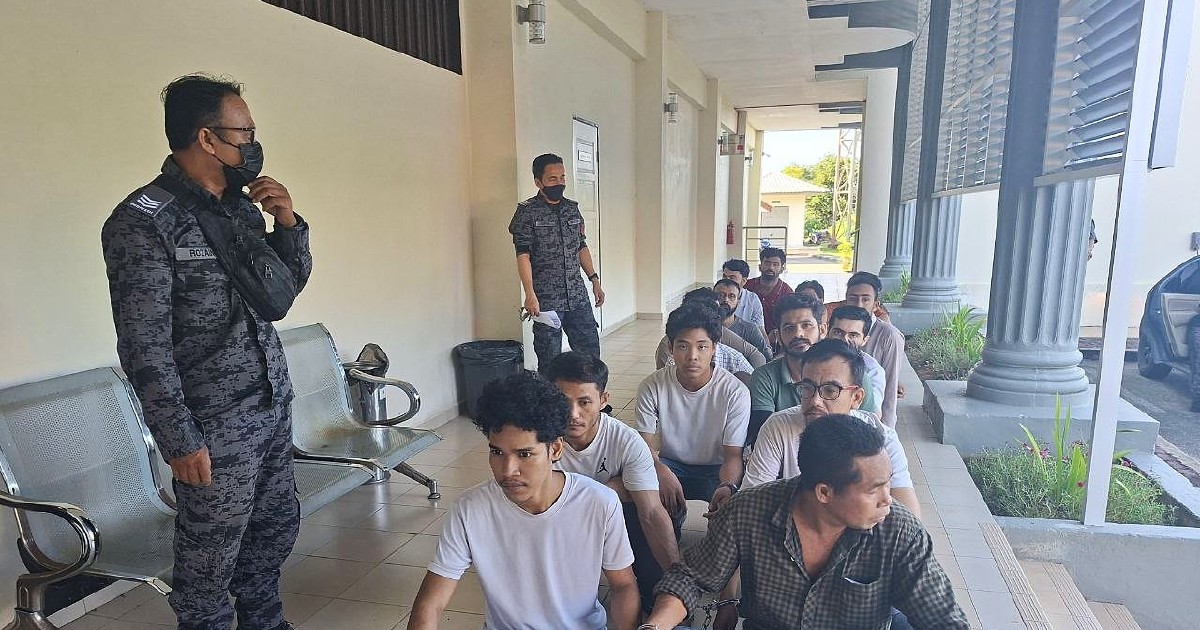
Fourteen foreign men faced charges in the Kelantan Sessions Court in Pasir Mas on allegations relating to unlawful entry into Malaysia, breaching the terms of their visitor status and unauthorized use of travel documentation. The court proceedings underscore the government's ongoing commitment to tightening border security and combating immigration-related offences that remain a persistent challenge across the country.
Immigration violations have become an increasingly serious concern for Malaysian authorities, who contend with a steady stream of individuals attempting to enter the country through irregular channels or remain beyond their authorized periods. The nature of these charges—spanning entry without proper authorization, extended stays that breach visitor permits, and misuse of travel documents—reflects typical patterns identified in immigration enforcement operations. Kelantan, positioned along Malaysia's border with Thailand, has historically been a focal point for such enforcement activities due to its geographic vulnerability and porous crossing points.
The Pasir Mas Sessions Court serves as a primary venue for hearing immigration-related cases in the northern region, and today's proceedings represent part of a broader pattern of prosecutions. Authorities have intensified scrutiny of foreign nationals, particularly those without proper documentation or those who have exceeded their permitted duration of stay. The charges brought against these individuals demonstrate the scale at which immigration violations occur within Malaysia, affecting border management capabilities and public safety considerations.
The misuse of travel documents represents a particularly serious dimension of these charges. Such offences often involve the falsification, alteration or unauthorized use of passports, visas or entry permits—actions that facilitate human trafficking networks, labour exploitation and other criminal activities. When foreign nationals manipulate their documentation, they circumvent identity verification systems and create serious security blind spots for immigration authorities tasked with maintaining accurate records and ensuring national safety.
Overstaying charges carry significant implications for both violators and the enforcement agencies responsible for monitoring compliance. Malaysia operates a visitor pass system that specifies permitted lengths of stay, typically ranging from fourteen to ninety days depending on nationality and travel purpose. Individuals who remain beyond these periods face legal consequences and potential deportation, yet enforcement capacity remains constrained by the volume of arrivals and the challenge of tracking compliance across diverse entry points and locations nationwide.
From a regional perspective, these prosecutions reflect broader Southeast Asian concerns about irregular migration and document fraud. Neighbouring countries including Thailand, Indonesia and the Philippines have similarly grappled with rising caseloads of immigration violations, leading to increased cooperation among immigration authorities through regional frameworks. Malaysia's enforcement efforts contribute to this collective regional approach, though resources and capacity vary significantly across different jurisdictions and border zones.
The economic dimensions of immigration enforcement merit consideration. Foreign workers, whether authorized or irregular, contribute substantially to Malaysia's economy across construction, agriculture, manufacturing and domestic service sectors. However, those operating without proper status often face exploitation, earn below minimum wages and contribute minimally to official tax revenues. The enforcement of immigration laws thus serves dual purposes: maintaining border security while also protecting vulnerable foreign workers from systematic abuse by unscrupulous employers.
Sentencing outcomes in immigration cases typically include fines, imprisonment or both, alongside deportation orders. The severity of penalties depends on the specific charges, prior offence history and circumstances of violation. For overstaying alone, penalties generally range from modest fines to short custodial sentences, while document fraud carries more substantial consequences. These legal frameworks aim to deter future violations while maintaining proportionate responses to administrative breaches versus more serious criminal conduct.
The case highlights challenges faced by Malaysian immigration authorities in resource allocation and operational prioritization. With limited personnel and infrastructure, officials must balance proactive enforcement operations against reactive responses to reported violations and security concerns. The concentration of prosecutions at specific locations like Pasir Mas suggests targeted operations focusing on identified hotspots, a practical approach given the substantial geographic scope of Malaysia's borders and the continuous flow of transit passengers.
Broader questions emerge regarding the effectiveness of current enforcement strategies and whether prosecution alone addresses underlying factors driving illegal entry and overstaying. Demand for migrant labour, employment networks that facilitate irregular hiring, and inadequate inspection of workplaces create persistent conditions enabling immigration violations. Comprehensive solutions require coordinated action across immigration, labour, law enforcement and business regulatory agencies, alongside cooperation with source countries and employer accountability mechanisms.
For Malaysian readers and businesses, these prosecutions serve as reminder of the legal obligations surrounding employment of foreign workers and the serious consequences of non-compliance with immigration regulations. Employers who knowingly hire undocumented workers or facilitate visa violations face their own legal liability, alongside reputational risks and operational disruptions from enforcement action. The case also underscores the importance of maintaining proper documentation and travel authorization, particularly for visitors and temporary workers navigating Malaysian immigration requirements.

