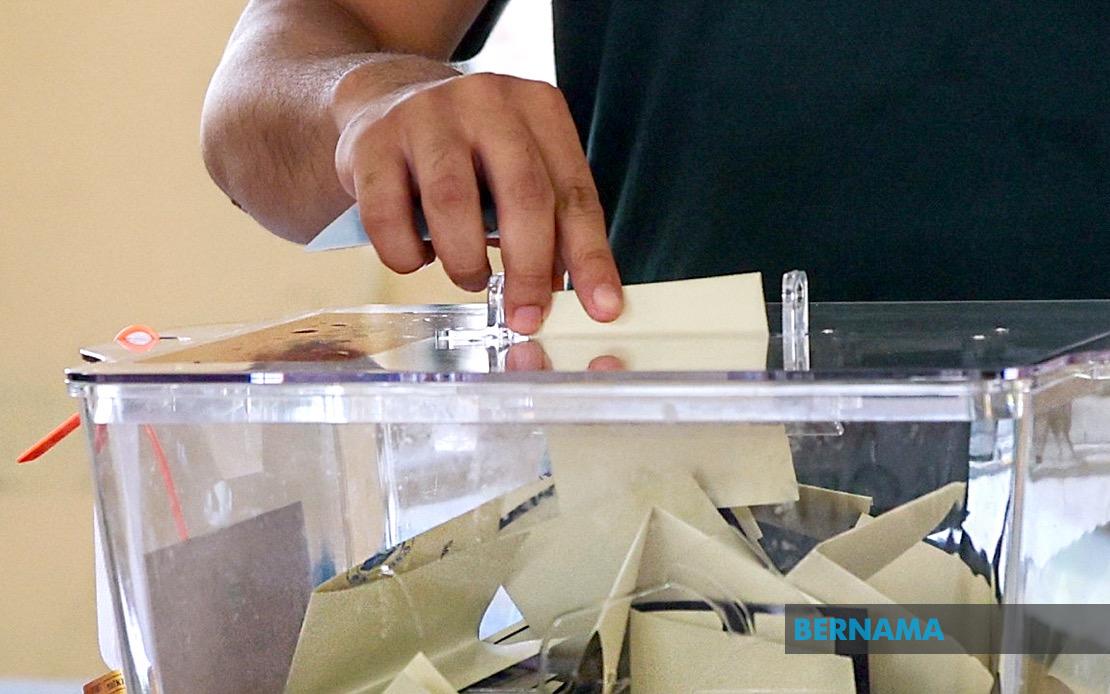
A self-employed resident of Batu Pahat discovered the true cost of election day traffic congestion when his 120-kilometre journey to participate in the 16th Johor state election fell short by a single minute. Rahmat Shukor, 57, arrived at SJK (C) Foon Yew 4 in Johor Bahru after the polling centre had officially closed, unable to cast his vote despite the considerable effort and distance he had travelled. The setback marked a rare instance of democratic participation literally missed by the narrowest of margins, underscoring the logistical challenges voters face during major electoral events in Malaysia.
Rahmat's journey had begun from Sri Medan in Batu Pahat, where he had elected to spend the night at his late mother's residence after completing demanding plantation and contract work. His original plan had been to return to Johor Bahru the previous day, but exhaustion from his labour-intensive employment led him to postpone the journey and rest overnight. This decision would prove fateful, as the following morning's drive to reach the polling centre in time became an exercise in frustration against factors entirely beyond his control.
The primary obstacle to Rahmat's participation emerged in the form of severe traffic congestion that materialised along the main route from Simpang Renggam Rest and Recreation Area towards Sedenak, extending onwards along the Skudai road corridor. Despite maintaining a non-stop drive from his starting point and attempting multiple alternative routes to circumvent the unexpected bottlenecks, the cumulative delays rendered all such efforts insufficient. He arrived at the polling venue precisely when the official closing time of 6pm had already passed, rendering his right to vote moot and his journey wasted.
The contrast between Rahmat's experience and that of his family members underscored the arbitrary nature of such electoral misfortunes. His wife and other family members had returned to Johor Bahru on Friday and successfully cast their votes during regular polling hours, ensuring their participation in the state election. Rahmat alone, despite his investment of time and travel resources, found himself excluded from the democratic process through circumstances of timing and traffic rather than any personal negligence or lack of commitment to voting.
When speaking with Bernama outside the polling centre, Rahmat demonstrated both frustration and documentation of his predicament. He possessed photographic evidence of the traffic congestion that had delayed him and had informed polling officials of his situation, providing tangible proof of the circumstances that had conspired against his timely arrival. His account highlighted how even diligent voters equipped with legitimate explanations cannot override the hard deadline that electoral processes necessarily maintain for operational integrity.
The incident occurs within the context of Johor's broader electoral machinery, which coordinated polling across 1,076 centres throughout the state on voting day. Each of these venues operated under identical timing protocols, with closure at 6pm sharp, creating a fixed deadline that neither sympathetic circumstances nor compelling personal narratives could extend. This uniformity, while essential for procedural fairness and preventing disputes over extended voting windows, occasionally produces outcomes that feel inequitable to individual voters.
Rahmat's response to his disappointment revealed a pragmatic acceptance of the situation, despite the understandable frustration he had articulated. He acknowledged that the democratic process must continue and expressed hope that the election would proceed smoothly despite his personal inability to participate. This measured reaction, even in the face of a frustrating outcome, demonstrated civic maturity and an understanding that electoral systems cannot accommodate exceptions without undermining their legitimacy and integrity.
The broader implications of Rahmat's experience resonate across Malaysia's electoral landscape, particularly in a geographically dispersed state like Johor where voters may reside considerable distances from their assigned polling centres. The growth of urbanisation and work patterns that distribute employment across different municipalities means increasing numbers of voters find themselves voting far from their residential areas. Traffic conditions, especially during peak hours or on election day when voter movement concentrates within limited timeframes, create genuine barriers to participation that existing electoral frameworks do not adequately address.
Electoral officials and policymakers might consider whether the current system sufficiently accommodates logistical realities facing modern voters. Early voting provisions exist in some jurisdictions, yet their availability and promotion remain inconsistently implemented across Malaysian states. For voters like Rahmat, whose work commitments and family circumstances created unavoidable timing challenges, expanded advance voting opportunities or extended polling hours in specific constituencies could enhance participation rates without compromising electoral security or procedural integrity.
The Johor state election ultimately proceeded as scheduled, with all polling centres closing at the designated time, ensuring standardised procedures and preventing the administrative complications that selective deadline extensions might create. Rahmat's case, while poignant, illustrates the friction between democratic ideals of universal participation and the practical necessity for fixed operational boundaries. His 120-kilometre journey, despite its disappointing conclusion, reflects the commitment Malaysian voters maintain towards participating in the electoral process, even when circumstance conspires against them.

