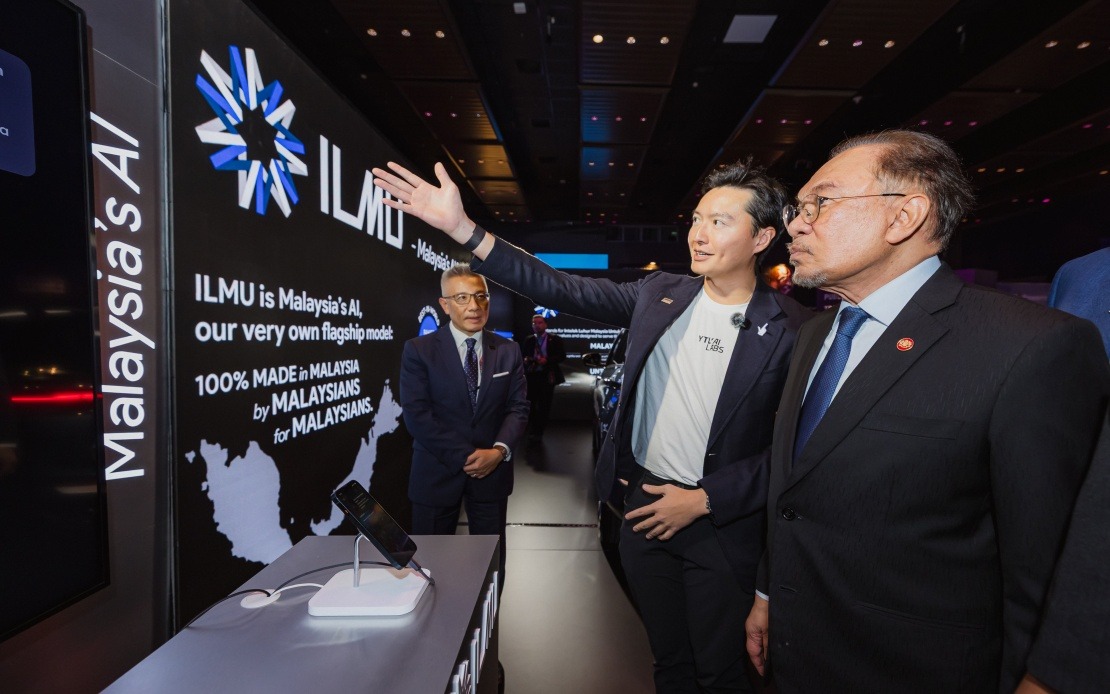
Malaysia's push to democratise artificial intelligence reached a significant milestone on August 31 with the launch of a major accessibility programme targeting 100,000 young citizens. YTL AI Labs announced that residents aged 18 to 30 would receive three months of free access to ILMUchat Pro, a locally developed AI assistant, marking a tangible step forward in the government's broader ambition to position the country as a regional AI leader.
The initiative forms part of the Ministry of Digital's AI Untuk Rakyat programme, a collaborative effort involving YTL AI Labs and MyDIGITAL Corporation through the Rakyat Digital platform. The timing deliberately coincides with Malaysia's Independence Day observance, underscoring the government's vision of technological empowerment as a national priority. By removing financial barriers for this demographic, policymakers are attempting to ensure that the benefits of AI adoption are not confined to affluent segments of society or established professionals.
What distinguishes ILMUchat Pro from generic AI tools is its fundamental design philosophy centred on how Malaysians authentically communicate. The system seamlessly handles code-switching between Bahasa Malaysia, English, Mandarin Chinese and Manglish—the colloquial blend of English and Malay that characterises everyday Malaysian discourse. This cultural adaptation represents a deliberate engineering choice, as most global AI platforms default to English-centric interfaces, potentially limiting accessibility for users more comfortable in local languages.
The practical applications of ILMUchat Pro extend across multiple dimensions of young Malaysians' lives. Students can leverage the tool for research assistance and academic writing, while job seekers can refine applications and cover letters. Entrepreneurs and small business operators gain access to capabilities for creating marketing collateral, designing graphics and developing prototypes without requiring coding expertise. Perhaps most notably, the system offers targeted support for distinctly Malaysian concerns—users can obtain guidance on PTPTN loan repayment strategies, SME grant applications and navigating the complex landscape of local government support schemes.
Access to the three-month free subscription, which normally costs RM50 monthly, is not unconditional. Eligible Malaysians must first complete designated AI learning modules hosted on the Rakyat Digital platform before claiming their voucher. This gatekeeping mechanism serves dual purposes: it ensures participants develop foundational AI literacy before using the tool, and it drives engagement with educational content designed to build wider digital competency. The requirement transforms what might otherwise be a simple subsidy into a structured learning intervention.
The redemption process itself has been streamlined for user convenience. Participants simply log into Rakyat Digital, complete their assigned courses, navigate to their dashboard, select ILMUchat Pro, and authenticate using their MyDigital ID to activate the free access window. This integration with existing government digital infrastructure reduces friction while expanding the reach of the MyDigital ID system, which serves as Malaysia's digital identity foundation.
Prime Minister Datuk Seri Anwar Ibrahim first unveiled this programme in July during the formal launch of AI Malaysia in Cyberjaya, alongside the National AI Action Plan 2026-2030. The National AI Action Plan establishes a comprehensive roadmap for transforming Malaysia into an AI-capable nation, with investments across research, infrastructure and human capital development. This ILMUchat Pro initiative represents the policy framework's translation into immediate, tangible benefit for citizens.
YTL AI Labs chief executive officer Foong Chee Mun positioned the initiative as more than mere technology distribution. His statement emphasised that the company aims to transform this demographic from passive consumers of AI into active builders and innovators who will shape Malaysia's emerging AI ecosystem. This framing reflects growing recognition that the future competitiveness of Asian economies depends on cultivating deep pools of talent capable of developing, refining and deploying AI systems suited to regional contexts rather than simply importing foreign solutions.
The choice to target the 18-to-30 age bracket carries strategic significance. This cohort represents Malaysia's digital natives and early-career professionals who will shape the nation's technological trajectory over the coming decades. By equipping them with proficiency in locally developed AI tools at a formative stage, policymakers hope to establish familiarity and preference that extends into their professional lives. Furthermore, this generation's relationship with AI will inform subsequent waves of adoption across their families, organisations and communities.
The programme reflects broader Southeast Asian recognition that AI adoption presents both opportunities and risks. Across the region, governments are attempting to ensure that AI capabilities are distributed equitably rather than concentrated among wealthy individuals and large corporations. Malaysia's approach—combining free access, mandatory training, and cultural localisation—offers a model that other nations may study and adapt.
However, the success of the initiative will ultimately depend on uptake rates and the subsequent career trajectories of participants. Three months provides sufficient time for users to develop practical competency, but sustaining engagement beyond the free period will require either demonstrated value or institutional support. Universities and employers might be encouraged to incorporate ILMUchat Pro into curricula and workplace systems to maximise the government's investment in this generation's AI literacy.
The programme also signals Malaysia's conviction that locally developed AI tools can compete with established international platforms. Rather than defaulting to ChatGPT, Google's AI or other foreign systems, the government is deliberately building and promoting homegrown alternatives. Success in this arena could generate spillover effects, encouraging venture capital, talent recruitment and research investment in Malaysia's broader AI sector.

