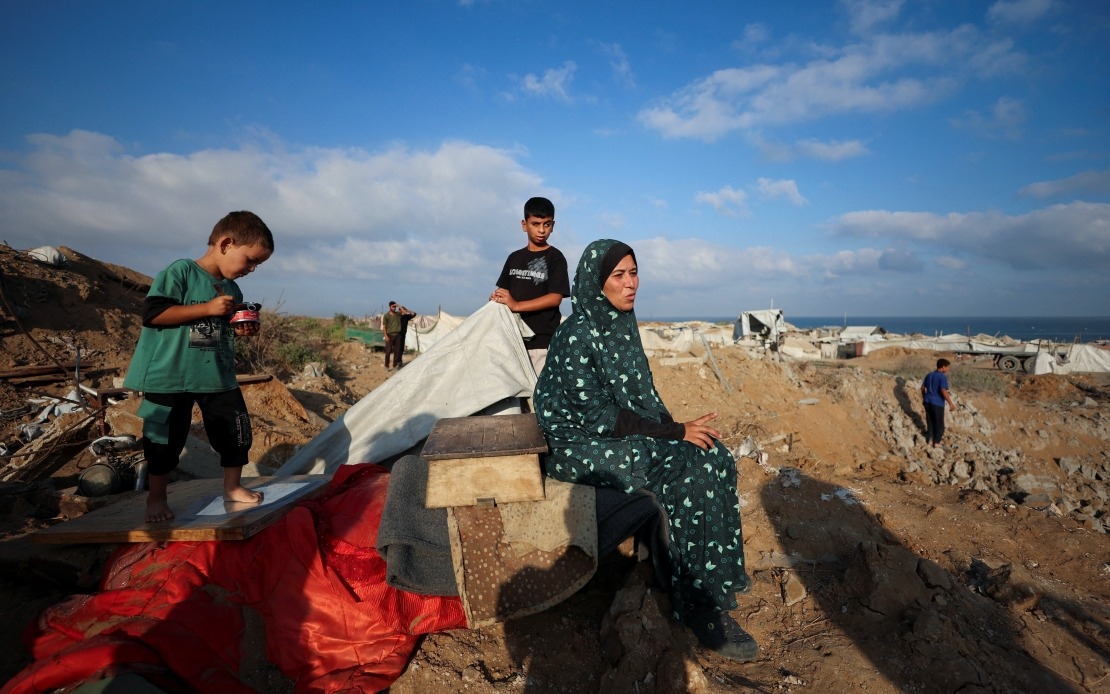
The humanitarian crisis gripping Gaza is set to deepen significantly over the coming months, with projections showing food insecurity affecting unprecedented numbers of civilians through the end of 2026. New analysis from the Integrated Food Security Phase Classification (IPC) released this week indicates that approximately 1.4 million Gazans will face what experts classify as "high levels of acute food insecurity"—a rise from 1.2 million documented between mid-April and June. The alarming figures underscore how fragile recent humanitarian gains have proven to be, even as international agencies struggle to maintain delivery operations across the territory.
The deterioration reflects a dramatic scaling back of food assistance since February, driven primarily by funding shortfalls and mounting uncertainties surrounding the operational capacity of international relief organizations. Just months ago, expanded humanitarian operations following the October 2025 ceasefire had delivered food aid to approximately 1.49 million people in May alone, suggesting that with adequate resources and stable conditions, significant portions of the population could be sustained. Yet current trajectory analysis reveals this momentary reprieve is unsustainable without substantial renewed commitment from the international donor community.
Perhaps most striking is the IPC's projection that two-thirds of Gaza's entire population—67 percent—will be classified in crisis conditions or worse by year-end. This encompasses both those in Phase 3 (crisis) and Phase 4 (emergency) classifications, with 212,000 individuals facing the most dire emergency conditions. Every single governorate across Gaza has been classified as operating within crisis thresholds, indicating the emergency is neither localized nor temporary but rather structural and widespread.
The economic collapse underpinning this food crisis cannot be overstated. According to the analysis, 83 percent of Gaza's households report having absolutely no source of income, fundamentally distinguishing this emergency from typical humanitarian disasters where some economic activity persists. This near-total economic destitution means the overwhelming majority of families have become entirely dependent on external aid for survival. Livelihoods have not merely contracted; they have effectively ceased to exist for the vast majority of the population, creating a dependency trap that cannot be quickly reversed.
Without any humanitarian food assistance whatsoever, the situation would become catastrophic: the IPC estimates that approximately 1.9 million people—roughly 90 percent of Gaza's entire population—would face acute food insecurity. This figure starkly illustrates how thin the line between subsistence and mass starvation has become. The territory's food production capacity and import infrastructure have been so thoroughly compromised that the population cannot feed itself through any combination of local production or commercial imports, making external assistance not merely beneficial but absolutely essential for survival.
Children represent the most vulnerable segment of this crisis. The IPC projects that 74,200 children under five years old will require treatment for acute malnutrition by April 2027, with approximately 11,432 of these cases classified as severe. Acute malnutrition in young children carries particular danger, as it can cause permanent developmental damage, impair cognitive capacity, and compromise immune function with lifelong consequences. Simultaneously, 24,600 pregnant and breastfeeding women require urgent nutritional support, meaning the crisis extends to the earliest stages of human life, with potential intergenerational health consequences.
The gains achieved since the ceasefire now appear increasingly precarious. The IPC's own assessment emphasizes that improvements remain "highly fragile," dependent entirely on continued humanitarian operations functioning at adequate capacity. Since February, however, funding constraints have forced reductions in assistance programs precisely when needs remain acute. International organizations operating in Gaza face bureaucratic obstacles, access restrictions, and operational uncertainties that further undermine their capacity to deliver aid reliably.
For Malaysia and Southeast Asian nations observing this crisis, the situation carries several implications. First, it demonstrates how regional conflicts can create humanitarian emergencies requiring sustained international response—a concern particularly relevant given various geopolitical tensions throughout the Asia-Pacific. Second, it underscores the vulnerability of civilian populations when infrastructure and livelihoods are destroyed during conflicts. Third, it highlights how humanitarian assistance, while essential, remains insufficient as a permanent solution and cannot substitute for political resolution and economic recovery.
The IPC has issued clear recommendations aimed at preventing catastrophic deterioration: sustained humanitarian access, expanded nutrition-specific programs targeting the most vulnerable groups, and a permanent cessation of hostilities to create conditions allowing economic recovery. Without these interventions, the current trajectory points toward a humanitarian catastrophe affecting a population already traumatized and depleted by years of conflict. The international community faces a critical window in which preventive action remains possible, but only if sustained commitment overcomes donor fatigue and operational obstacles.
For policymakers and international observers, the Gaza food insecurity projections represent a test case in humanitarian responsibility. The technical analysis clearly documents what will happen if assistance declines further. Whether the international community responds with adequate resources and political will remains an open question that will shape outcomes for 1.4 million vulnerable people and their children's futures.

